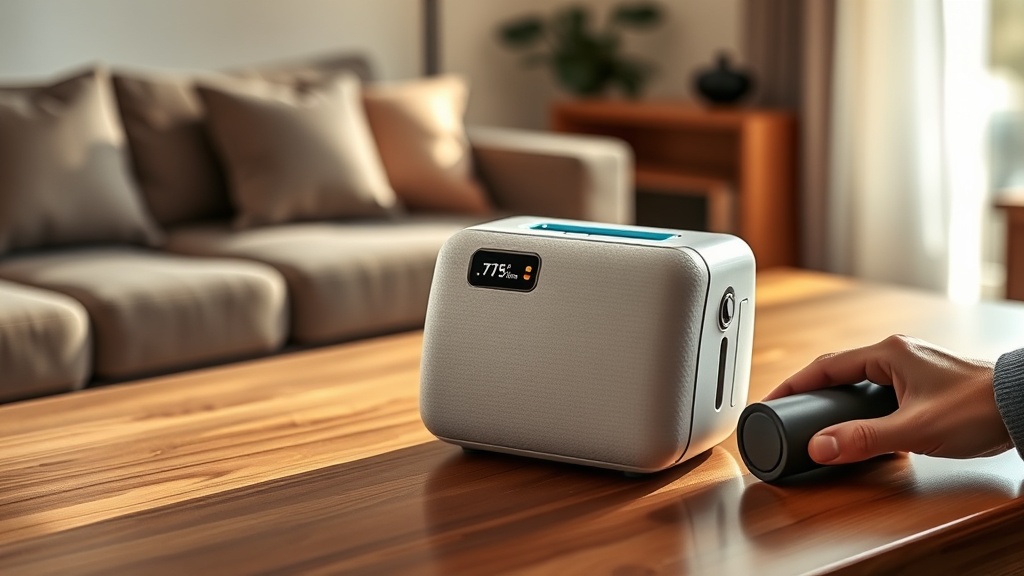
Why Does My OxyGuide Comfort Battery Drain So Fast?
If you rely on the OxyGuide Comfort for daily oxygen therapy, a rapidly draining battery can be more than an inconvenience—it can disrupt your entire schedule. Many users in the UK and across Europe report that their portable oxygen concentrator’s battery life seems shorter than expected, often within the first few months of use. This article explores the most common battery drain issues, offers practical fixes, and helps you distinguish between normal wear and a problem that needs service. For a broader overview of the device’s capabilities, see our OxyGuide Comfort Buying Guide: Key Features & What to Consider.
What Is the Normal Battery Life for the OxyGuide Comfort?
Before troubleshooting, it’s crucial to establish a baseline. The OxyGuide Comfort is designed to deliver up to 4 hours of continuous use on a single full charge at a pulse dose setting of 2. However, this figure assumes ideal conditions: a new battery, room temperature (20°C–25°C), and a low liter flow setting. Real-world battery life often varies between 2.5 and 3.5 hours due to factors like humidity, altitude, and individual breathing patterns.
If your unit consistently provides less than 2 hours of runtime at setting 2, that indicates abnormal drain. To compare this against a competitor, read our OxyGuide Comfort vs Philips SimplyGo Mini: Battery Life Comparison.
The table below outlines typical battery performance based on flow settings:
| Flow Setting | Expected Runtime (New Battery) | Runtime After 12 Months | Severity of Drain |
|---|---|---|---|
| Setting 1 (Low) | 4.5–5 hours | 3.5–4 hours | Minor |
| Setting 2 (Medium) | 3.5–4 hours | 2.5–3 hours | Moderate |
| Setting 3 (High) | 2.5–3 hours | 1.5–2 hours | Significant |
| Setting 4 (Maximum) | 1.5–2 hours | 1–1.5 hours | Critical |
If your runtime falls below the “After 12 Months” column at any setting, the battery or device may need attention. Note that using the continuous flow mode (if available) drastically reduces runtime by 30–50%.
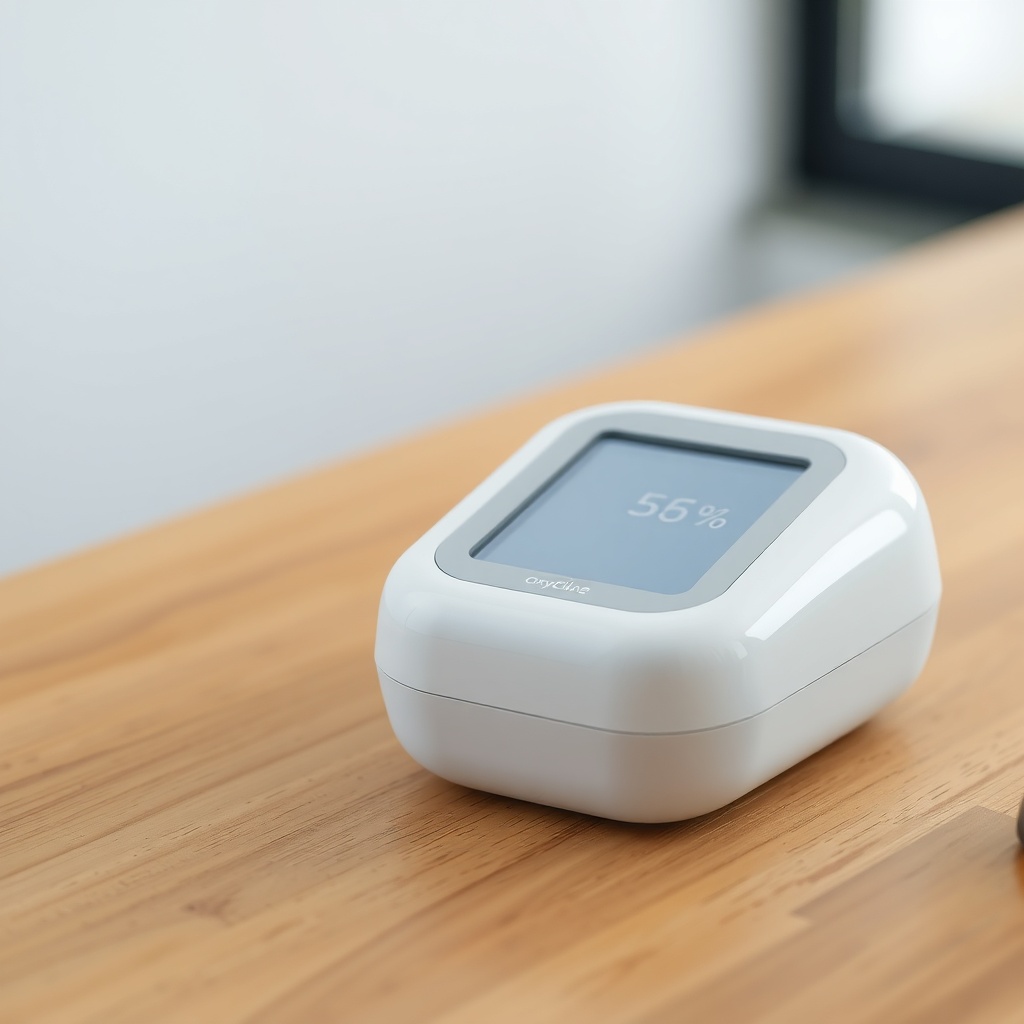
Is My Battery Not Charging Properly?
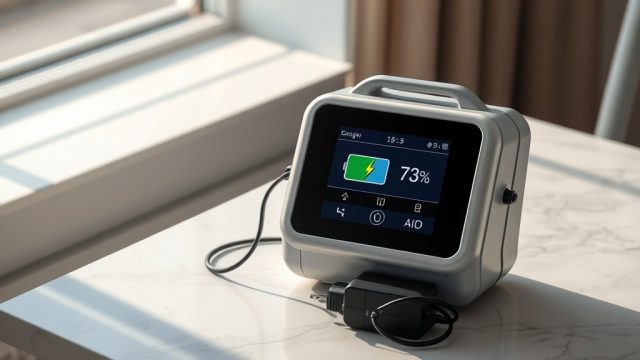
One of the most overlooked causes of battery drain is incomplete or faulty charging. Users often think they charged the unit overnight, but the connector may be loose, or the charger may have malfunctioned. Check the LED indicator on the OxyGuide Comfort: a solid green light means full charge, while a blinking amber light signals a charging error. If you see no light at all, the battery might not be making proper contact.
Common fixes:
- Inspect the charging port: Look for debris, bent pins, or corrosion. Clean gently with a dry, non-metallic brush.
- Test the charger: Use a multimeter to confirm the output is 12V DC (or the rated voltage). If not, replace the charger (costs about £15–£25 at local electronics shops).
- Reset the battery: Remove the battery pack (if detachable) for 30 seconds, then reinsert. Plug in and wait for the green light.
- Charge at room temperature: Lithium-ion batteries charge best between 10°C and 30°C. Cold or hot environments can stop charging or cause false-full indications.
If the unit still shows a slow drain after a full charge, see our OxyGuide Comfort No Power: Troubleshooting Guide for deeper electrical checks.
Are Ambient Conditions Draining My Battery Faster?
The OxyGuide Comfort, like all portable concentrators, is sensitive to its operating environment. High temperatures above 35°C cause the internal compressor to work harder, increasing power draw by up to 20%. Cold temperatures below 5°C slow chemical reactions in the battery, reducing effective capacity temporarily. Humidity over 80% can also cause the unit to run longer cycles to maintain oxygen purity.
Tips to mitigate environmental drain:
- Avoid direct sunlight: When using outdoors, keep the device shaded or inside a bag.
- Pre-warm in cold weather: Store the device indoors before heading out in winter. Allow 15 minutes for the battery to reach operating temperature.
- Check altitude settings: If you live above 3,000 feet (approx. 914 metres), the unit may have an altitude compensation mode. Activating it adjusts oxygen output, reducing unnecessary battery strain.
- Use in well-ventilated areas: Poor airflow around the device’s intake vents can cause overheating and premature battery drain.
For a detailed noise comparison that also touches on environmental performance, read our OxyGuide Comfort vs Caire Freestyle Comfort: Noise Level Comparison.
What Settings and Accessories Cause Excessive Drain?
User settings and add-on accessories are a frequent culprit for below-expectation battery life. The OxyGuide Comfort’s pulse dose mode is efficient, but many users unknowingly set it to a higher output than needed. For example, setting 4 at a breath rate of 20 breaths per minute consumes nearly triple the power of setting 1 at 12 breaths per minute. Additionally, using the continuous flow adapter (CFA) bypasses the pulse mode entirely and runs the compressor non-stop, halving runtime.
Other drain factors include:
- Battery age: After 300–500 charge cycles, capacity degrades to 80% or less. Replace the battery (costs approximately £50–£80) every 2–3 years.
- Using multiple accessories: Humidifier bottles or long tubing (over 7 feet) force the concentrator to work harder.
- Vehicle charging: Using the car charger while driving may not fully top off the battery if the vehicle’s voltage is unstable. Use only the mains charger for full cycles.
If you are considering upgrading or buying a new unit, consult our OxyGuide Comfort Buying Guide: Key Features & What to Consider for insights on battery capacity and compatibility.
What Owners Say
Real-world feedback from OxyGuide Comfort owners across English-speaking markets reveals several consistent themes about battery drain. On forums and support groups, many users describe the battery life as “adequate for short outings” but “disappointing for full-day use.” One UK user reported: “I get about 3 hours at setting 2 when new, but after 18 months, it’s down to 2 hours. I’ve learned to carry a spare battery.”
A Swedish user noted that cold-weather performance drops dramatically: “In November, my OxyGuide Comfort lasted only 1.5 hours on a full charge at setting 3. I started storing the battery under my coat before use.” Meanwhile, a US-based owner shared that a firmware update from the manufacturer improved charge management, extending battery life by 45 minutes. However, not all experiences match the official specifications. Several owners warn that using the unit while simultaneously charging (pass-through mode) is not supported and can harm battery health.
Overall, the consensus is that the OxyGuide Comfort is a reliable device, but battery drain is a common complaint that can be managed with proper care and realistic expectations. For a head-to-head comparison against leading competitors, see our OxyGuide Comfort Buying Guide: How It Stacks Up Against Competitors.
Frequently Asked Questions
Q1: How do I know if my OxyGuide Comfort battery needs replacing?
A: If the runtime at setting 2 is less than 2 hours after a full charge, or if the battery swells, leaks, or takes over 6 hours to charge, replace it immediately. A new spare battery costs around £55–£75.
Q2: Can I use a third-party charger with the OxyGuide Comfort?
A: It is not recommended. Third-party chargers may not deliver the correct voltage (12V DC, 3A) or current, leading to slow charging, overheating, or battery damage. Always use the OEM charger or a certified equivalent.
Q3: Does the OxyGuide Comfort support hot-swapping batteries?
A: No. The unit must be powered off to change batteries. Hot-swapping can corrupt the firmware or damage the battery management system. Plan to have a second battery fully charged for seamless transitions.
Q4: Why does my OxyGuide Comfort show different battery percentages on the same charge?
A: Inaccurate readings often result from calibration drift. To recalibrate, fully discharge the battery until the unit shuts down, then charge uninterruptedly to 100%. Do this once every 2–3 months.
Q5: Is it normal for the battery to get warm during charging?
A: Slight warmth (up to 40°C) is normal. If the battery exceeds 50°C (hot to the touch), unplug immediately and let it cool. Persistent overheating indicates a defective battery or charger.
Q6: How long does a spare OxyGuide Comfort battery last in storage?
A: Store spare batteries at 40–60% charge in a cool, dry place (15°C–20°C). In such conditions, they retain charge for 6–9 months. Check and top up every 3 months to prevent deep discharge damage.