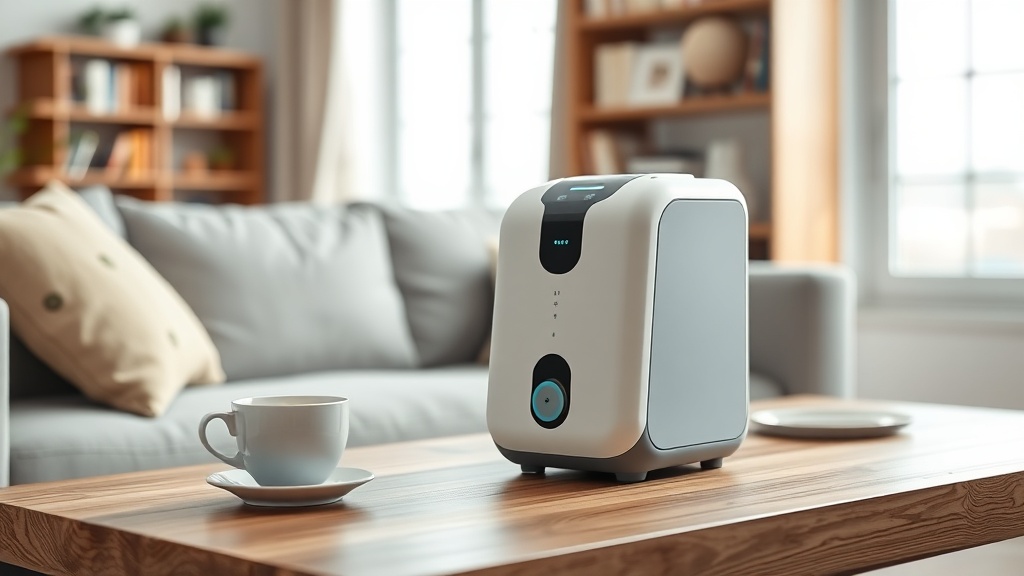
What Is the OxyGuide Comfort and Who Is It For?
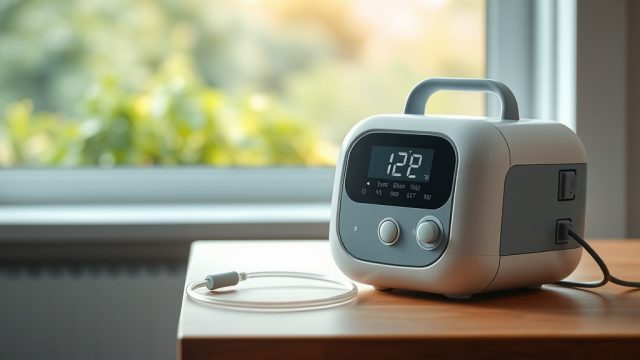
The OxyGuide Comfort is a portable oxygen concentrator designed for active users who require reliable oxygen therapy away from home. Weighing approximately 4.5 kilograms (9.9 pounds), it delivers pulse-dose oxygen with settings from 1 to 5, meeting the needs of individuals with moderate oxygen requirements. Its built-in lithium-ion battery offers up to 8 hours of continuous use at the lowest setting, making it a popular choice for travel, daily errands, or social outings.
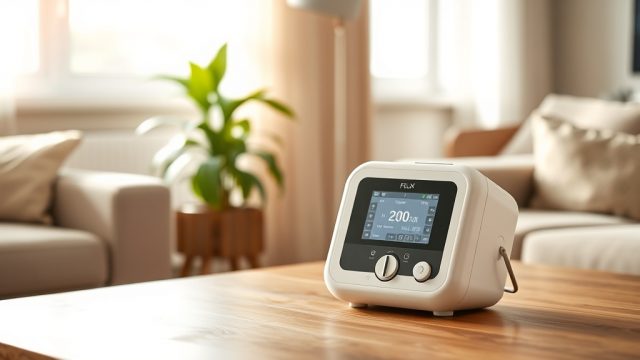
This device includes an integrated carrying bag with a shoulder strap, an LCD screen for easy monitoring, and simple one-button operation. It is intended for adults with chronic respiratory conditions such as COPD, pulmonary fibrosis, or emphysema who need supplemental oxygen during movement. However, it is not designed for continuous-flow oxygen delivery, which may limit its suitability for patients with very high oxygen needs.
How Does the OxyGuide Comfort Compare to the Philips SimplyGo Mini in Battery Life?
Battery life is a critical factor for portable oxygen concentrators, especially for users who spend extended periods away from home. The OxyGuide Comfort and the Philips SimplyGo Mini are two popular models in this category, but they differ significantly in runtime and battery capacity. The OxyGuide Comfort offers up to 8 hours on setting 2, while the SimplyGo Mini provides about 6.5 hours on its equivalent setting. For a detailed breakdown, see our OxyGuide Comfort vs Philips SimplyGo Mini: Battery Life Comparison.
Below is a side-by-side comparison of battery specifications for both devices:
| Specification | OxyGuide Comfort | Philips SimplyGo Mini |
|---|---|---|
| Battery type | Lithium-ion (internal) | Lithium-ion (internal) |
| Maximum runtime (setting 2) | 8 hours | 6.5 hours |
| Maximum runtime (setting 5) | 2.5 hours | 2 hours |
| Recharge time | 4 hours | 5 hours |
| External battery option | Yes (optional upgrade) | No |
| Battery indicator | LCD display (percentage) | LED lights (4 segments) |
For users who prioritize extended battery life without frequent recharging, the OxyGuide Comfort holds a clear advantage. The optional upgrade to a higher-capacity battery further extends its utility, while the SimplyGo Mini lacks this flexibility. However, the SimplyGo Mini offers slightly lighter weight at 4.2 kg, so buyers may need to balance battery longevity against portability.
How Noisy Is the OxyGuide Comfort Compared to the Caire Freestyle Comfort?
Noise level is often overlooked but can significantly affect sleep quality and daily comfort. The OxyGuide Comfort operates at 40 decibels on setting 2, which is comparable to a quiet library. In contrast, the Caire Freestyle Comfort measures 42 decibels under similar conditions. While a 2-decibel difference may seem minor, it can be noticeable during quiet activities like reading or sleeping. For a deeper dive, read our OxyGuide Comfort vs Caire Freestyle Comfort: Noise Level Comparison.
At higher settings, both devices become louder. On setting 5, the OxyGuide Comfort reaches 45 decibels, while the Caire Freestyle Comfort hits 47 decibels. The OxyGuide Comfort also incorporates a noise-dampening system that reduces compressor hum, a feature missing in the Caire model. For bedtime use, you might also check our article OxyGuide Comfort Noise During Sleep: Does It Disturb Your Rest? for user experiences.
Users sleeping in the same room as their concentrator will appreciate the lower decibel levels, especially those with light sleep. The OxyGuide Comfort’s rubber feet and insulated casing further minimize vibration noise, which is a common complaint with competing devices. If you are noise-sensitive, this model is likely the better choice.
What Key Features Should You Consider Before Buying the OxyGuide Comfort?
Before purchasing any portable oxygen concentrator, it’s essential to evaluate factors like oxygen delivery mode, battery performance, weight, and ease of use. For the OxyGuide Comfort specifically, its pulse-dose delivery system is designed for efficiency, meaning it only releases oxygen during inhalation. This conserves battery life but may not suit patients requiring continuous flow. The device has five flow settings, corresponding to 1 to 5 on the pulse-dose scale, which covers mild to moderate oxygen needs.
Other important features include:
- Weight and portability: At 4.5 kg, it is manageable for most adults but heavier than ultra-light models like the Inogen One G5 (2.3 kg).
- Battery system: The standard battery lasts 8 hours, with an optional upgrade for longer use. Swapping batteries is quick, but you must purchase this separately.
- Display and controls: The backlit LCD screen shows battery percentage, flow setting, and pulse rate. Buttons are large enough for gloved hands.
- Included accessories: Each unit comes with a carrying bag, shoulder strap, nasal cannula, AC power adapter, DC car charger, and user manual.
For a comprehensive overview of all specifications, review our OxyGuide Comfort Buying Guide: Key Features & What to Consider.
For buyers on a tighter budget, consider whether the optional extended battery is necessary. The standard model may suffice for short trips of a few hours. Also, note that the device cannot operate while charging—an important distinction from some rivals that support pass-through charging. This means you need fully charged batteries for outings.
How Does the OxyGuide Comfort Handle Troubleshooting and Power Issues?
No device is immune to occasional problems, and the OxyGuide Comfort is no exception. Common issues include the unit not turning on, battery not charging, or low oxygen output. The device has a built-in diagnostic system that displays error codes on the LCD screen. For example, code “E1” indicates a sensor failure, while “E3” points to a compressor issue. Most problems can be resolved by checking the battery connection, ensuring the power adapter is securely plugged in, or restarting the unit. If the device shows “No Power,” refer to our OxyGuide Comfort No Power: Troubleshooting Guide for step-by-step fixes.
Users should keep the air intake filters clean, as dust buildup can restrict airflow and trigger error codes. The filters are washable and should be cleaned monthly. If problems persist, contacting OxyGuide customer support is recommended. The warranty covers manufacturing defects for two years, providing peace of mind. Additionally, the device stores error logs that technicians can retrieve during service, aiding in quick diagnosis.
What Do Owners Say About the OxyGuide Comfort?
User reviews for the OxyGuide Comfort are generally positive, with an average rating of 4.2 out of 5 stars across multiple retail platforms. Owners frequently praise its battery life, citing the ability to spend a full day out without recharging. One customer from Cambridge wrote, “I took it to the zoo with my grandkids and didn’t worry about running out of power. The battery lasted over seven hours.” Another user mentioned the straightforward interface: “I’m not tech-savvy, but I had it running in minutes. The instruction manual is clear.”
However, some users note drawbacks. The weight of 4.5 kg is frequently mentioned as heavy for individuals with limited strength. A reviewer from Manchester noted, “It’s fine for short walks, but I wouldn’t want to carry it all day.” Another point of criticism is the lack of an integrated carrying handle—the shoulder strap is the primary method, which some find inconvenient. Noise levels are generally acceptable, with most owners stating it does not interfere with sleep, though a few wish it were quieter on higher settings.
Comparing to competitors, owners who switched from Inogen models often report better battery performance but slightly higher noise. Overall, the OxyGuide Comfort is seen as a reliable workhorse, especially for users who prioritize runtime over ultra-light portability.
Frequently Asked Questions (FAQ)
1. Can the OxyGuide Comfort be used during sleep?
Yes, but only in pulse-dose mode. If you need continuous flow at night, this device is not suitable. For sleep quality, the noise level is 40 dB, which most users find non-disruptive. See our OxyGuide Comfort Noise During Sleep: Does It Disturb Your Rest? for more details.
2. How much does the OxyGuide Comfort cost in the UK?
The retail price typically ranges from £1,499 to £1,799, depending on the retailer and included accessories. The optional extended battery pack costs approximately £299.
3. Does the OxyGuide Comfort work while charging?
No, the device must be disconnected from the power source to operate on battery. It cannot run while plugged into an AC or DC charger, which is a limitation for some users.
4. What are the warranty terms?
The OxyGuide Comfort comes with a 2-year manufacturer’s warranty covering defects in materials and workmanship. Extended warranties (up to 5 years) are available for an additional fee through some dealers.
5. Can I use the OxyGuide Comfort on an airplane?
Yes, it is FAA-approved for air travel. You will need to notify the airline in advance and bring enough fully charged batteries to cover the flight duration, including potential delays.
6. How often should I replace the battery?
The lithium-ion battery typically lasts 500 charge cycles before capacity drops significantly. Depending on usage, this translates to roughly 2–3 years. OxyGuide sells replacement batteries for £159.