Philips SimplyGo Mini Buying Guide: Is It Right for You?
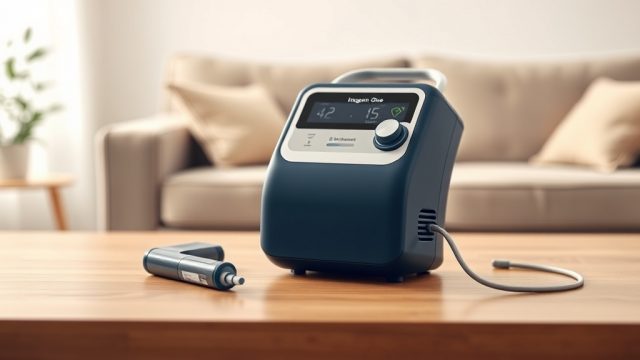
Choosing a portable oxygen concentrator is a deeply personal decision that hinges on your lifestyle, oxygen needs, and budget. The Philips SimplyGo Mini has carved out a significant place in the market, but it is not the right fit for everyone. This buying guide walks you through the critical factors—from battery runtime to portability—so you can decide with confidence whether this compact unit deserves a place in your daily routine.
How Does the Battery Life Match Your Daily Routine?
The Simplygo Mini uses a 4-cell lithium-ion battery pack rated for 42 watt-hours. At a pulse dose setting of 2, you can expect roughly 4.5 to 5 hours of continuous operation. That figure drops to about 2.5 hours at setting 5. If you spend most of your day away from a power outlet—say, during a full workday or a long flight—this runtime may feel restrictive. You can purchase a second battery (around £350 / $430) and swap it mid-day, but that adds weight and cost.
For shorter errands or half-day outings, the standard battery is usually sufficient. If your average trip exceeds four hours at higher flow settings, consider pairing the unit with an external battery pack or looking at models with larger built-in batteries. For a deeper breakdown of battery performance, including real-world tests, read our dedicated review: How Long Does the Philips SimplyGo Mini Battery Last?
Is the Noise Level Acceptable for Public or Shared Spaces?
Noise is a frequent concern for anyone using oxygen therapy in restaurants, libraries, or around family. The SimplyGo Mini produces a measured sound output of approximately 40 dBA at a 1-meter distance on setting 2, and about 43 dBA on setting 5. This is comparable to a quiet conversation or a running refrigerator. While not silent, it rarely draws unwanted attention in most public settings.
However, if you are a light sleeper or plan to use the device in a quiet bedroom, the hum may be noticeable. The unit’s compressor operates continuously, but the sound is a low, steady whir rather than a sharp or intermittent noise. For comparison data against other top portables, see our How Quiet is the Philips SimplyGo Mini? Noise Level Test article.
Key noise notes:
- Low setting (2): ~40 dBA – unobtrusive in most rooms.
- High setting (5): ~43 dBA – similar to a desktop computer fan.
- Sleep mode: Not available; unit always runs at set rate.
What Are the Physical Demands of Carrying and Using It Daily?
At roughly 5.2 kilograms (11.5 pounds) including the standard battery, the SimplyGo Mini is light enough to carry with a shoulder strap or in a backpack. The carrying handle is well-padded, and the unit’s dimensions (290 x 180 x 120 mm) make it easy to slide into a larger tote or suitcase. That said, it is not a pocket-friendly device—anyone with limited hand strength or mobility issues may find the weight tiring over a full day.
For users who want maximum portability, consider the optional rolling cart accessory. This adds about 0.8 kg but eliminates lifting. The unit also fits standard airline overhead bins, though you must check with your carrier regarding FAA approval (it is FAA-approved for in-flight use).
| Feature | What It Means for You |
|---|---|
| Weight (with battery) | 5.2 kg (11.5 lb) – manageable for most adults |
| Dimensions | 290 x 180 x 120 mm – fits most backpacks |
| Carrying options | Shoulder strap, backpack, or rolling cart |
| Flight readiness | FAA approved for in-cabin use |
How Does the Oxygen Delivery Performance Compare to Home Units?
The SimplyGo Mini delivers oxygen via pulse-dose delivery only, not continuous flow. It offers six flow settings (roughly corresponding to 1–5 LPM equivalent in pulse mode). For most people with moderate COPD or pulmonary fibrosis, the pulse doses are adequate for normal activity. However, if your prescription requires continuous flow oxygen during exercise or sleep, this device will not serve you well.
The unit uses a compressor-based system that concentrates oxygen from ambient air, achieving purity of 87% to 96% depending on altitude and settings. At higher altitudes (above 3,500 meters), performance begins to drop noticeably. For a direct comparison against a popular competitor in the same class, see our Philips SimplyGo Mini vs Inogen One G5: Comparison article.
What Do Real Owners Say After Six Months of Use?
Owner experiences across forums and support groups reveal a few consistent themes. Many praise the unit’s compact size and quiet operation for daily errands. One long-term user noted, “I can take it to the grocery store without people staring, and it fits under my seat on the bus.” Another common observation is that the battery life at higher settings feels short: “At setting 4, I barely get three hours. I have to carry a spare battery for full-day trips.”
Some users report that the shoulder strap can dig in after a few hours, especially if the unit is fully packed with an external battery. The touchscreen interface gets mixed reviews—responsive when dry but less so with sweaty or damp fingers. Overall, owners who match the unit to their moderate activity level tend to be satisfied, while heavy users often wish for longer battery runtime.
Frequently Asked Questions
Does the Philips SimplyGo Mini require a prescription?
Yes, in most countries including the United Kingdom and the United States, a valid prescription from a healthcare provider is required to purchase or rent this device. Your oxygen settings must be determined by a clinical assessment.
Can I use the SimplyGo Mini while sleeping?
The device is not designed for continuous flow delivery, which is typically needed during sleep. For overnight use, a separate home concentrator with continuous flow capability is usually recommended. Consult your doctor for sleep-specific oxygen requirements.
How often does the filter need to be replaced?
The external foam filter should be cleaned with mild soap and water every three months. Replacement filters from Philips cost about £15 / $18 and should be changed every six months or sooner if you notice reduced airflow.
Is the SimplyGo Mini compatible with other portable batteries?
Only Philips-branded batteries are officially supported. Using third-party batteries may void the warranty and could affect performance or safety. Spare batteries are available from medical supply retailers.
How long does it take to fully charge?
Using the supplied AC adapter (100–240 V), a completely drained battery reaches full charge in approximately 4 to 5 hours. A quick 30-minute charge provides about 30 to 40 minutes of runtime at setting 2.
What warranty covers this concentrator?
Philips typically offers a 3-year warranty on the device and a 1-year warranty on the battery. Coverage exclusions apply for damage caused by improper use or unauthorized repairs. Always register your unit online after purchase.