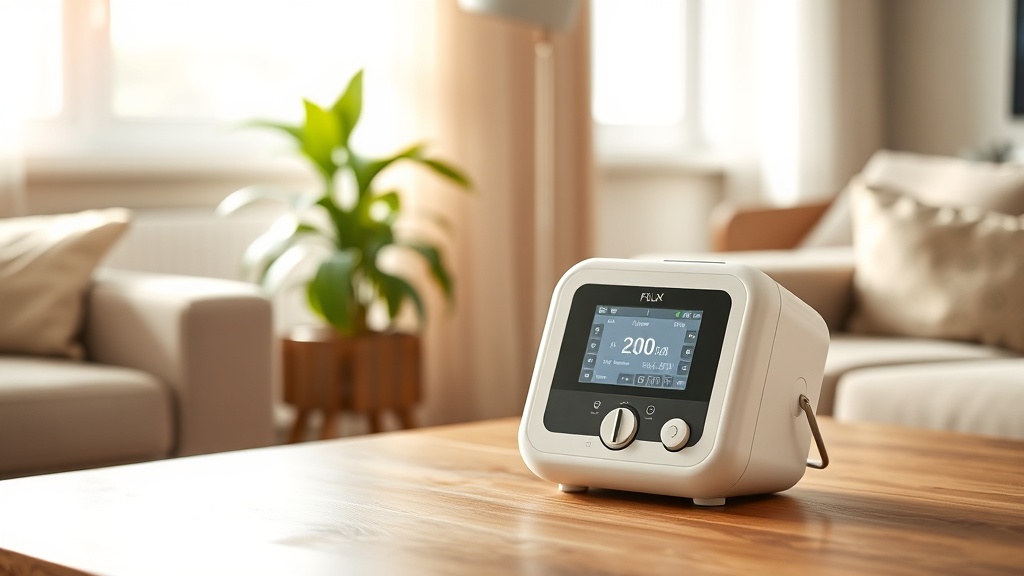
Introduction to the OxyGuide Comfort: A Comprehensive Buying Guide
Choosing a portable oxygen concentrator (POC) is a significant decision that impacts daily mobility, comfort, and overall quality of life. The OxyGuide Comfort has emerged as a strong contender in the market, offering a blend of pulse dose precision and continuous flow capability in a lightweight package. This buying guide covers the essential features, performance metrics, and practical considerations to help you determine if the OxyGuide Comfort fits your needs.
Whether you are using oxygen for chronic obstructive pulmonary disease (COPD), pulmonary fibrosis, or other respiratory conditions, understanding the device’s battery life, flow settings, and noise output is critical. We also integrate comparisons with other leading models and practical owner insights to provide a complete picture.
What Is the Pulse Dose and Continuous Flow Delivery System?
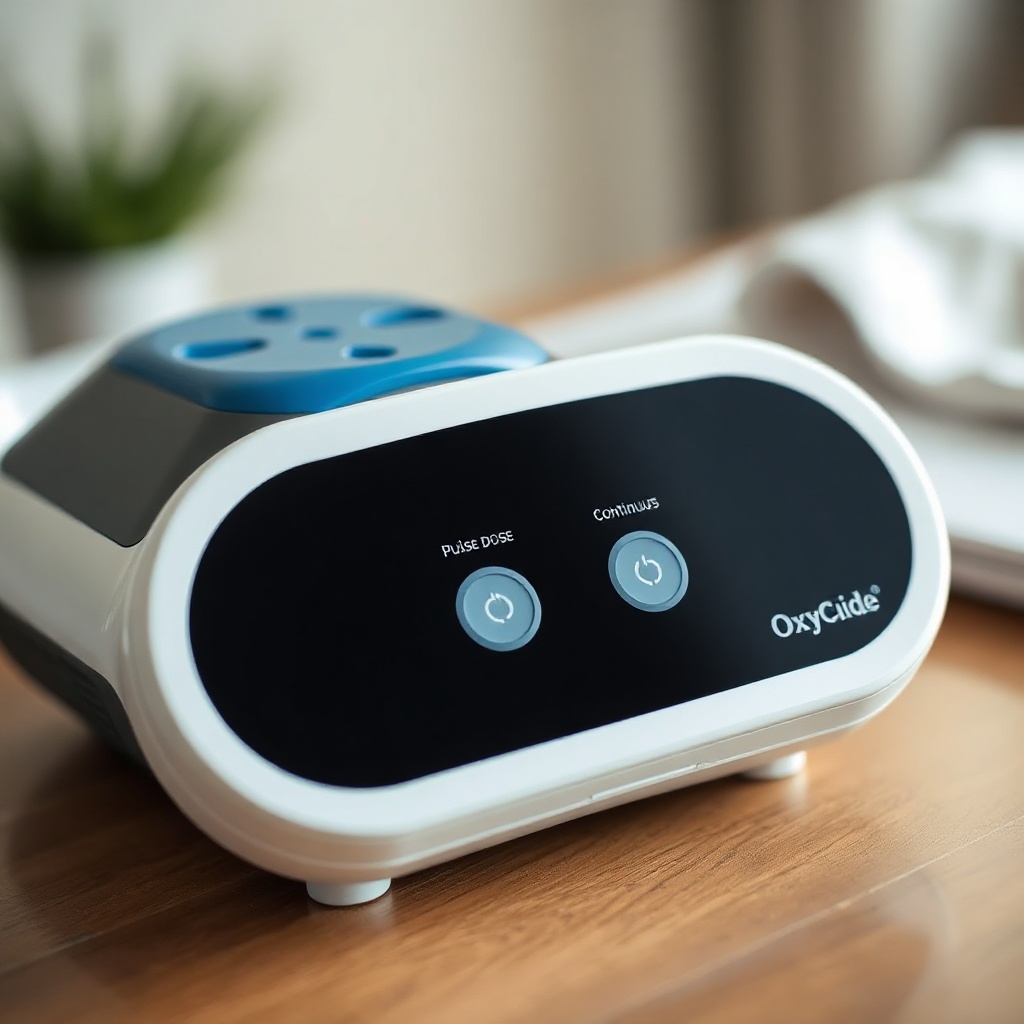
The OxyGuide Comfort is a dual-mode POC, meaning it operates in both pulse dose and continuous flow modes. Pulse dose delivers oxygen only when you inhale, conserving battery and boosting efficiency. Continuous flow provides a steady stream of oxygen regardless of breathing pattern, essential for nighttime use or for patients who require a constant oxygen supply.
The device offers six pulse dose settings (P1 to P6) and two continuous flow settings (0.5 and 1.0 LPM). For a deeper dive into selecting the right mode, our article OxyGuide Comfort Pulse Dose vs Continuous Flow: Which Setting to Choose? explains the clinical differences and practical implications.
How Does Battery Life Compare to Competitors?
Battery performance is a cornerstone of any portable concentrator. The OxyGuide Comfort uses a lithium-ion battery pack that delivers up to 8 hours on pulse dose setting 2 and up to 3 hours on continuous flow at 0.5 LPM. One external battery can be swapped easily, extending usage during travel.
When comparing battery life, the OxyGuide Comfort holds its ground against the Philips SimplyGo Mini, which offers up to 8 hours on pulse dose but only 1.3 hours on continuous flow at 0.5 LPM. The OxyGuide Comfort’s continuous flow runtime is more generous, making it practical for longer trips where nocturnal oxygen is needed. For a side-by-side battery analysis, see our OxyGuide Comfort vs Philips SimplyGo Mini: Battery Life Comparison.
| Setting | Mode | Battery Life (hours) |
|---|---|---|
| Pulse dose 2 | Pulse | 8.0 |
| Pulse dose 6 | Pulse | 4.5 |
| Continuous flow 0.5 LPM | Continuous | 3.0 |
| Continuous flow 1.0 LPM | Continuous | 2.0 |
Recharging the battery from empty takes approximately 4 hours. The device can be used while plugged into AC power, a car charger, or an external battery charger. In the US, a replacement battery costs around $395. In the UK, expect approximately £310; in Canada, roughly CAD 520; in Australia, AUD 580; and in Europe, about €365.
Is the Noise Level Quiet Enough for Sleep?
Noise can disrupt sleep quality, especially in a hospital or home setting. The OxyGuide Comfort operates at a sound level of 32 dB on pulse dose and 36 dB on continuous flow. This places it in the quiet category, similar to a soft library or a quiet conversation at a distance.
For comparison, the Caire Freestyle Comfort measures 38 dB on pulse dose, making the OxyGuide Comfort noticeably quieter. If you are a light sleeper or share a bedroom, the OxyGuide Comfort’s low noise profile is a distinct advantage. Our article OxyGuide Comfort Noise During Sleep: Does It Disturb Your Rest? provides further insights from users who rely on the device during the night.
What Is Included in the Warranty Coverage?
The OxyGuide Comfort comes with a standard 3-year manufacturer’s warranty covering parts and labor for the concentrator unit, excluding consumables like batteries, cannulas, and filters. The battery carries a 1-year warranty. The warranty does not cover damage from misuse, unauthorized repairs, or accidental drops.
For complete details on what is and is not covered, along with how to register your device, refer to our guide: OxyGuide Comfort Warranty Coverage: What’s Included and What’s Not. Extended warranty plans are available from third-party providers, typically costing between $150 and $300 for an additional two years, depending on your region.
How Does It Compare with the Inogen One G5?
The Inogen One G5 is a popular competitor, offering a slightly lighter weight (4.8 lbs vs. the OxyGuide Comfort’s 5.2 lbs) and up to 10.5 hours on pulse dose setting 2. However, the Inogen One G5 does not provide continuous flow, limiting its utility for nocturnal users or those requiring constant oxygen. The OxyGuide Comfort, by contrast, delivers both modes, making it more versatile. In terms of continuous flow runtime, the OxyGuide Comfort far exceeds the G5, which only offers pulse dose.
Price-wise, the OxyGuide Comfort is typically $200–$400 less than the Inogen One G5. For a detailed feature-by-feature breakdown, read our OxyGuide Comfort vs Inogen One G5: Which Portable Oxygen Concentrator Is Better?.
What Owners Say About the OxyGuide Comfort
User feedback consistently highlights two strengths: battery longevity for travel and the quiet operation. Many owners report that the continuous flow mode allowed them to sleep through the night without feeling starved of oxygen, a common complaint with pulse-dose-only devices. Some users note that the carry bag straps could be padded more, but most find the weight manageable for daily errands or short walks.
Long-term owners appreciate the reliability of the internal battery after many charge cycles, with minimal capacity loss over two years. A few mention that the LCD screen is clear and easy to read, even in bright outdoor light. Complaints are rare but include the occasional nebulizer attachment not included and the relatively slower recharging time compared to some newer models.
Frequently Asked Questions
1. Can the OxyGuide Comfort be used on an airplane?
Yes, the OxyGuide Comfort is FAA-approved for use on aircraft. You must remove the battery before storing the unit in the overhead compartment, but you can use it during flight with the battery attached.
2. Does the device come with a carrying case?
Yes, the OxyGuide Comfort includes a padded backpack-style carrying case and a shoulder strap. The case has external pockets for extra batteries and accessories.
3. How do I know which pulse dose setting is right for me?
Consult your healthcare provider for a prescription. Generally, setting P2 is equivalent to 0.5 LPM continuous flow, but your oxygen saturation levels should guide the exact setting.
4. Can I purchase the OxyGuide Comfort without a prescription?
No, in most countries, a prescription is required to purchase a portable oxygen concentrator. You will need to provide a doctor’s order.
5. What is the approximate weight of the device?
The OxyGuide Comfort weighs 5.2 pounds (2.36 kg) including the standard battery. It is one of the lighter dual-mode POCs available.
6. Does the device have a filter that needs replacing?
Yes, the OxyGuide Comfort uses a washable foam filter that should be cleaned every two weeks. Replacement filters are inexpensive and available online.