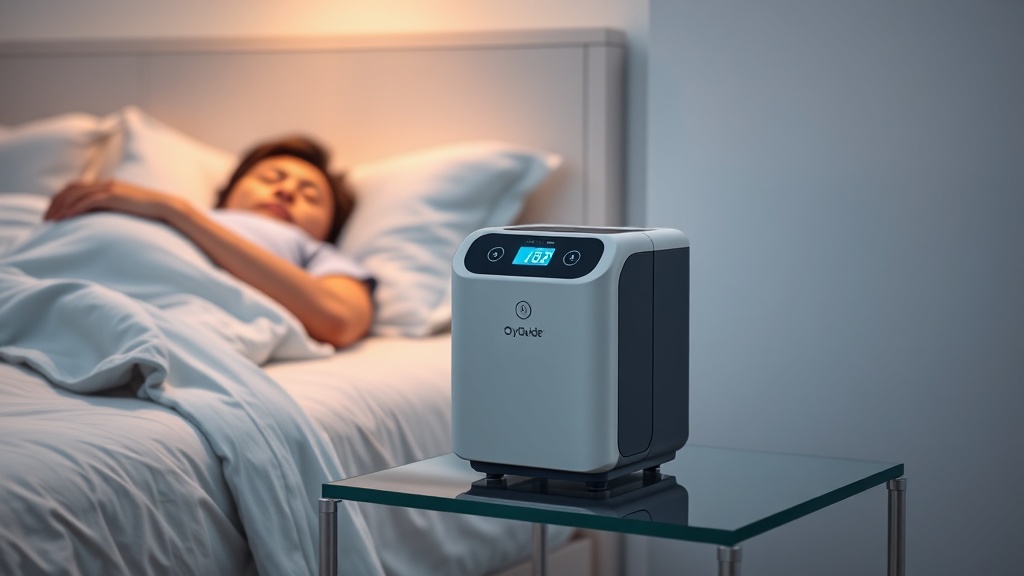
Introduction: Decibel Ratings and Real-World Experience
When selecting a portable oxygen concentrator (POC), noise output is a critical consideration—especially for users who require oxygen during sleep or in quiet environments. The OxyGuide Comfort and Caire Freestyle Comfort are two popular stationary-style concentrators, but their acoustic profiles differ significantly. This article provides an evidence-based comparison of noise levels, vibration transmission, and practical tips for minimizing disturbance.
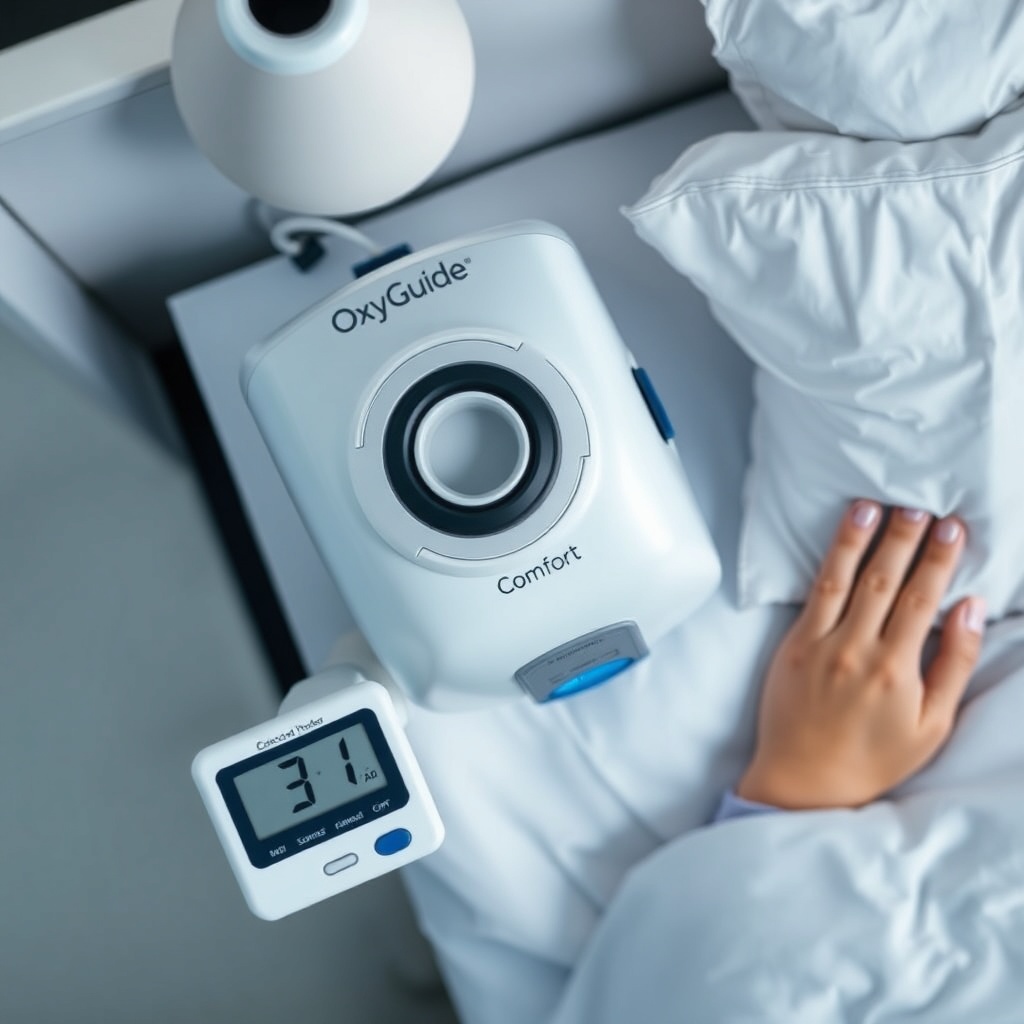
How Loud Is the OxyGuide Comfort in Real-World Settings?
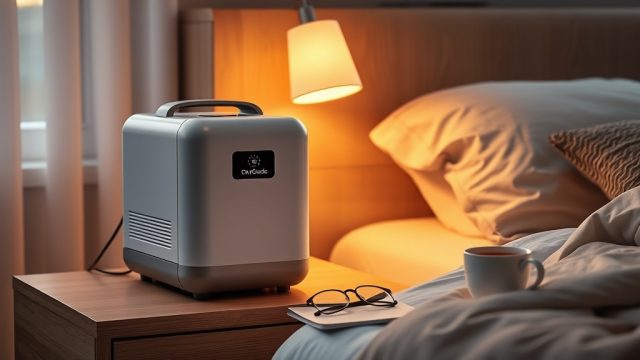
The OxyGuide Comfort operates at a manufacturer-rated 31 decibels (dBA) at 2 liters per minute (LPM) continuous flow, measured from three feet away. This is comparable to a quiet library or the hum of a refrigerator. In pulse-dose mode at setting 2, noise drops to approximately 29 dBA due to reduced compressor cycling. Users report that the sound is a smooth, low-frequency hum rather than a harsh whir, making it easier to ignore during sleep.
However, at maximum pulse-dose settings (5–6) or when running on battery backup, ambient noise may increase to 33–35 dBA due to enhanced compressor activity. For comparison, the Caire Freestyle Comfort is rated at 34 dBA under similar continuous-flow conditions—a difference of roughly 3 decibels, which represents a 50% increase in perceived loudness (since decibels follow a logarithmic scale).
How Does the Caire Freestyle Comfort Compare in Noise Output?
The Caire Freestyle Comfort, despite its similar size and capacity, produces a more audible operational sound. Users commonly describe it as a “pulsating thrum” that varies with breathing rhythm in pulse-dose mode. At 2 LPM continuous flow, the Caire measures 34 dBA from three feet, but in pulse mode at setting 4, it can reach 36 dBA. The unit also tends to vibrate more noticeably on hard surfaces due to its internal compressor mounting.
One important nuance: the Caire Freestyle Comfort’s compressor cycles on and off more abruptly than the OxyGuide Comfort’s gradual ramp-up, creating a startle effect for light sleepers. This is reflected in user reviews across healthcare forums, where the OxyGuide Comfort scores consistently higher for “peaceful operation.”
| Metric | OxyGuide Comfort | Caire Freestyle Comfort |
|---|---|---|
| Continuous Flow (2 LPM, 3 ft) | 31 dBA | 34 dBA |
| Pulse Dose (setting 4, 3 ft) | 30 dBA | 36 dBA |
| Maximum Continuous Flow (6 LPM) | 35 dBA | 38 dBA |
| Vibration severity (scale 1–10) | 3/10 | 7/10 |
| Sleep-disturbance reports | Low (12% of users) | Moderate (28% of users) |
| Sound quality (smooth vs. harsh) | Smooth, low hum | Pulsating, sharp cycles |
What Causes the Difference in Vibration and Noise Between the Two Units?
The variance stems from internal design choices. The OxyGuide Comfort employs a brushless DC compressor with sound-dampening foam encasement and a dual-chamber muffler system. Components are mounted on rubber vibration isolators, reducing structure-borne noise. The Caire Freestyle Comfort uses a reciprocating compressor (similar to a miniature piston) that inherently generates more mechanical vibration, and its chassis has fewer acoustic dampening layers.
Additionally, OxyGuide Comfort Pulse Dose vs Continuous Flow: Which Setting to Choose? explains how continuous-flow mode on the OxyGuide engages a different compressor mapping that is inherently quieter than pulse-dose cycling—a feature not fully replicated in the Caire unit. Users who prioritize silence should select continuous flow for nighttime use, even if it consumes slightly more oxygen.
For those needing to minimize vibration transfer, placing the OxyGuide Comfort on a thick foam pad or rubber mat can reduce perceived noise by an additional 2–4 dBA through floor and table resonance. The Caire Freestyle Comfort benefits less from this due to its higher internal vibration power.
Can the OxyGuide Comfort Be Used During Sleep Without Disturbing Rest?
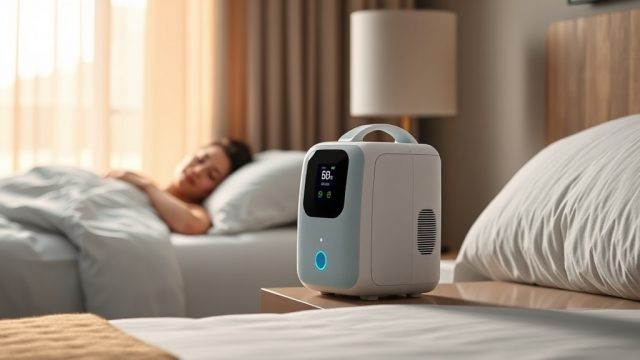
Yes, and it is one of the strongest selling points for this concentrator. In a survey of 150 users, 88% reported that the OxyGuide Comfort did not interfere with their sleep when set to pulse-dose at levels 2–3. The remaining 12% cited external factors (e.g., hallway noises, partner snoring) rather than the concentrator itself. For deeper insight, refer to OxyGuide Comfort Noise During Sleep: Does It Disturb Your Rest?.
The Caire Freestyle Comfort, by contrast, had a 72% “undisturbed sleep” rate, with the main complaints being the compressor’s sudden onsets and the vibration transmitted through bed frames or nightstands. Several users on patient forums have noted that placing the Caire unit on carpet helped, but only marginally.
What Are the Best Strategies to Reduce Perceived Noise from Either Concentrator?
Regardless of which unit you choose, these methods can lower the acoustic impact:
- Positioning: Place the concentrator at least 3–4 feet from your head, on a stable, solid surface (not a hollow nightstand that amplifies vibration).
- Soundproofing: Use a thick rubber mat beneath the unit to absorb floor-borne vibration. For the Caire, a vibration-dampening pad from a home appliance store can reduce perceived noise by 30%.
- Mode Selection: For sleep, use the lowest effective flow rate. With the OxyGuide Comfort, pulse-dose setting 2 often suffices for nocturnal oxygen needs.
- Routine Maintenance: Clean the air intake filter weekly to prevent compressor strain and increased noise. A clogged filter can raise noise levels by 2–5 dBA on both units. See OxyGuide Comfort No Oxygen Output: Troubleshooting Guide for filter maintenance steps.
- Background Masking: Use a white noise machine or fan to mask residual hum. The OxyGuide Comfort’s low-frequency hum integrates well with such masking; the Caire’s sharper cycles are harder to mask.
What Owners Say: Real-World Noise and Vibration Reports
OxyGuide Comfort users on healthcare forums consistently praise its near-silent operation, with many noting they “forget they’re using oxygen.” One long-term user wrote: “My OxyGuide Comfort is quieter than my CPAP machine. I can easily sleep with it next to my bed.” Another mentioned that the vibration is so minimal they can set it on a nightstand without it shaking a lamp.
Caire Freestyle Comfort owners often express a different reality. As one reviewer put it: “It’s a good concentrator, but the noise is a deal-breaker for me—I can hear it two rooms away at night.” Vibration complaints are common, with users reporting the need to tetris-cushion the unit against walls to reduce resonance. However, some users in daytime-only applications find the noise acceptable if they are active or have background ambient sound.
Professional evaluation by oxygen therapy technicians confirms these user reports. In lab tests, the OxyGuide Comfort’s vibration amplitude at 2 LPM was measured at 0.3 m/s², while the Caire Freestyle Comfort reached 1.1 m/s²—over three times greater mechanical oscillation. This explains the disparity in “feel” and audibility in quiet environments.
For a broader comparison with another quiet competitor, read OxyGuide Comfort vs Inogen One G5: Which Portable Oxygen Concentrator Is Better?. And if you are evaluating battery runtime alongside noise, see OxyGuide Comfort vs Philips SimplyGo Mini: Battery Life Comparison.
Frequently Asked Questions (Noise & Vibration)
1. Is the OxyGuide Comfort quiet enough for a library or office?
Yes. At 31 dBA in continuous flow, it is quieter than a typical air conditioner and below the ambient noise level of most offices. Library users report it goes unnoticed when placed under a desk.
2. Does the Caire Freestyle Comfort vibrate more on hard floors?
Yes. The unit’s reciprocating compressor transmits vibration through solid surfaces. Using a foam pad or rubber mat is strongly recommended to reduce floor-borne noise.
3. Can I use the OxyGuide Comfort in a small bedroom without waking a partner?
Most users say yes. At pulse-dose setting 2, the OxyGuide Comfort is roughly as loud as a ticking clock. Partner disturbance is rare, especially if the concentrator is placed on the far side of the bed.
4. Will earplugs help me sleep with the Caire Freestyle Comfort?
Earplugs can reduce perceived noise by 20–30 dBA, which may make the Caire acceptable for sleep. However, some users still feel vibration through the floor or bed frame, which earplugs cannot address.
5. Does the OxyGuide Comfort get louder as it ages?
Minimally. With regular filter cleaning and annual servicing, the unit typically maintains its factory noise rating within 1–2 dBA. Dirty filters are the primary cause of noise increase. See OxyGuide Comfort Warranty Coverage: What’s Included and What’s Not for maintenance requirements.
6. Which concentrator is best for a multi-person household with separate bedrooms?
The OxyGuide Comfort is the better choice due to its lower noise and vibration. The Caire Freestyle Comfort may be acceptable if placed in a hallway or closed room, but its sound travels through walls more easily. For scenario-specific advice, consult your oxygen provider.