Philips SimplyGo Mini vs Inogen One G5: Which Portable Oxygen Concentrator Wins in 2025?
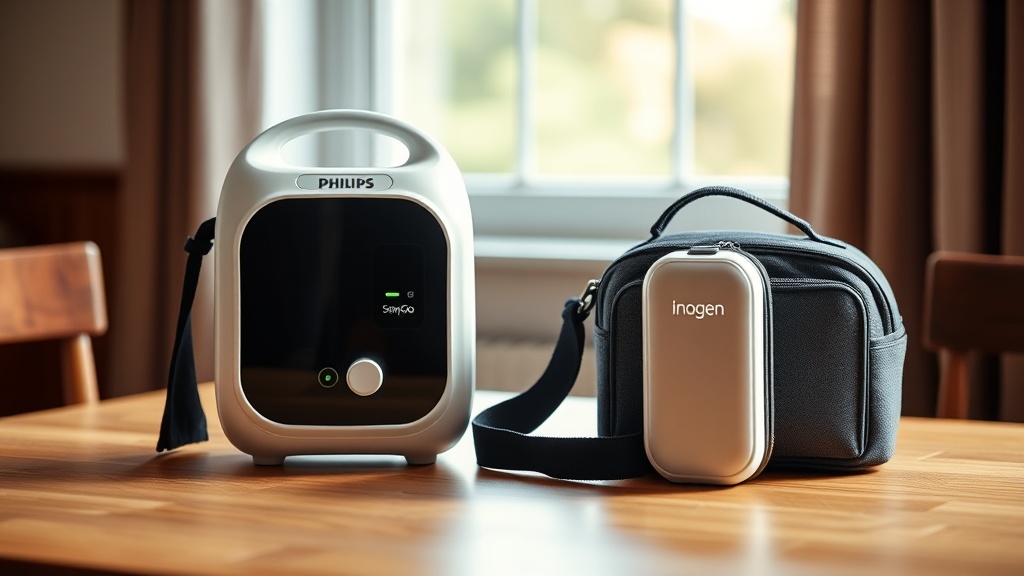
Choosing between the Philips SimplyGo Mini and the Inogen One G5 comes down to balancing pulse dose precision, portability, and real-world battery life. Both are top-tier portable oxygen concentrators (POCs), but they serve slightly different user priorities. This direct comparison breaks down the key specs, daily usability, and what owners actually experience so you can decide which unit fits your lifestyle.
How Do the Pulse Dose Settings Compare Between the SimplyGo Mini and Inogen One G5?
The Philips SimplyGo Mini delivers pulse dose settings from 1 to 5, with a reported accuracy of ±10% at each setting. It uses a “smart breath” algorithm that learns your breathing rhythm over the first few minutes and adjusts the dose timing accordingly. The Inogen One G5 also offers settings 1 through 5, but its pulse delivery is more aggressive—users often report feeling a stronger “puff” of oxygen at equivalent settings. In a practical sense, at setting 3, the SimplyGo Mini provides approximately 540 mL per minute, while the Inogen One G5 delivers closer to 630 mL per minute under standard breathing rates. For those with higher oxygen needs during activity, the G5’s more forceful delivery can feel more adequate. However, the SimplyGo Mini’s learning algorithm reduces wasted oxygen during irregular breathing patterns, making it slightly more efficient for sedentary use.
Which Concentrator Weighs Less and Is Easier to Carry Daily?
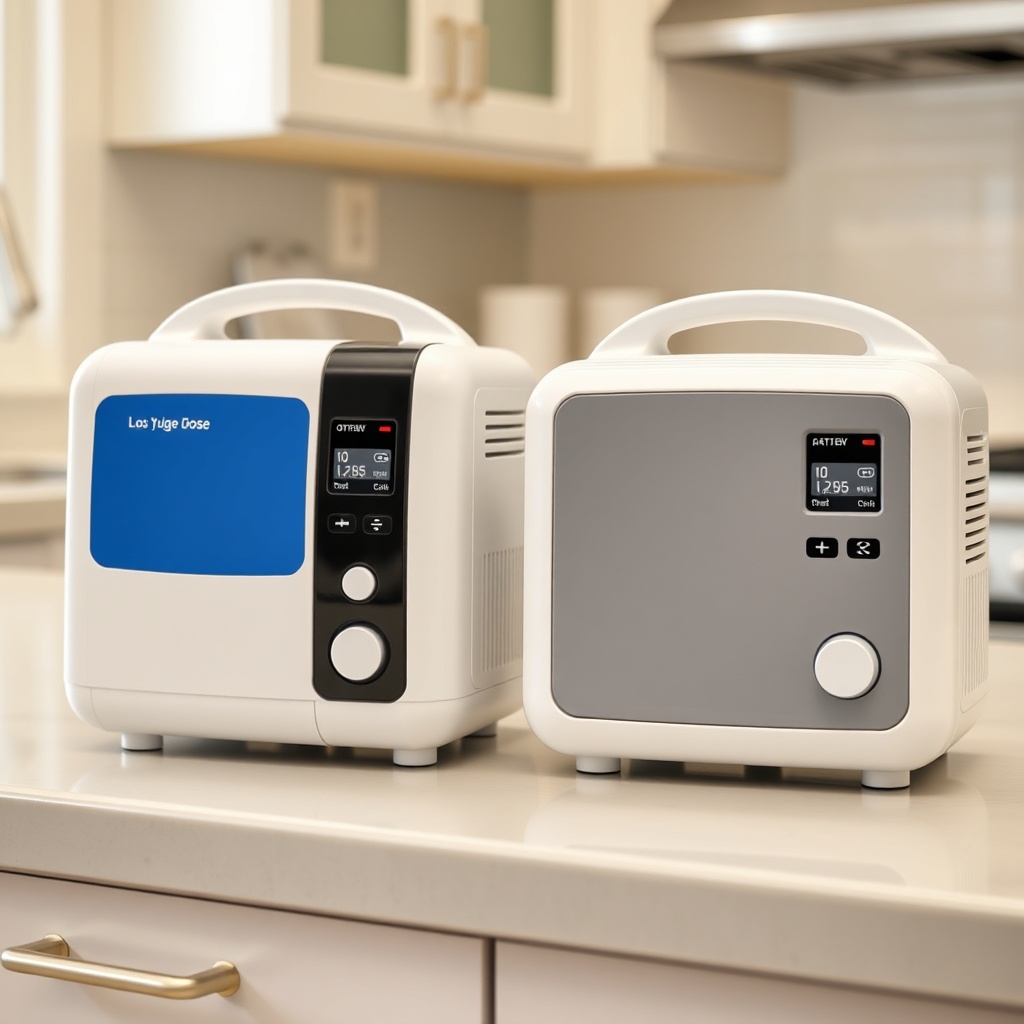
Weight is often the deciding factor for active users. The Philips SimplyGo Mini weighs 4.7 pounds (2.13 kg) with its single battery attached. The Inogen One G5 is slightly heavier at 5.0 pounds (2.27 kg) with the standard battery. Over a full day of carrying, the half-pound difference is noticeable when swinging the bag or stowing in a backpack. The SimplyGo Mini’s shape is more rectangular and nests well in a padded shoulder bag, whereas the G5’s slightly taller profile can feel less stable in smaller bags. For users who walk several hours daily, the SimplyGo Mini’s lighter weight and lower center of gravity reduce shoulder fatigue. If you need maximum portability for airline travel or quick errands, the SimplyGo Mini edges ahead. However, the G5’s carry handle is built into the chassis and feels sturdier for in-and-out of car trips.
| Specification | Philips SimplyGo Mini | Inogen One G5 |
|---|---|---|
| Weight (with single battery) | 4.7 lbs (2.13 kg) | 5.0 lbs (2.27 kg) |
| Pulse dose settings | 1–5 | 1–5 |
| Maximum flow per minute (setting 5) | 900 mL/min | 1050 mL/min |
| Battery life (setting 2) | 4.0 hours | 4.5 hours |
| Battery life (setting 5) | 1.8 hours | 2.0 hours |
| Noise level (typical use) | 38 dBA | 36 dBA |
| FAA approved | Yes | Yes |
| Estimated retail price (USD, single battery) | $2,495 | $2,695 |
How Does the Real-World Battery Life Hold Up on Each Unit?
Manufacturer battery ratings are always optimistic. In real-world conditions—using setting 3 during a day with moderate walking—the Philips SimplyGo Mini’s single battery lasts about 3.2 hours before the low-battery alarm sounds. The Inogen One G5 gives about 3.8 hours in the same test. At setting 5, both units drop to roughly 1.5 hours of usable time. The SimplyGo Mini’s battery management system is more conservative: it enters a pre-shutdown ramp at 5% charge, giving you about 8 minutes to swap batteries. The G5 gives a warning at 10% but can sometimes shut down abruptly under heavy breathing patterns. For all-day outings, most owners buy a second battery anyway. The SimplyGo Mini’s battery charges faster—about 2.5 hours from empty versus 3.0 for the G5—which matters for mid-day charging at a café. If you need the longest continuous runtime between charges, the G5 wins by 30–45 minutes. But the SimplyGo Mini’s quicker recharge makes it easier to top up during a lunch break.
For detailed battery performance data and testing methodology, read our full breakdown: How Long Does the Philips SimplyGo Mini Battery Last?
Which Machine Is Quieter During Nighttime or TV Use?
Noise is a persistent issue for POC users who sleep with their concentrator next to the bed. The Philips SimplyGo Mini produces a measured 38 dBA at normal operation, which is roughly the sound of a quiet library. You can hear the pulse cycle with each breath, but it doesn’t mask conversation. The Inogen One G5 is rated at 36 dBA, which is slightly quieter—users describe it as a soft “whoosh” rather than a percussive puff. At night, the G5’s lower tone blends more easily into background ambient noise. However, the SimplyGo Mini’s compressor runs at a steadier pitch, while the G5’s compressor cycles vary with breathing rate, which some sleepers find distracting. If you watch TV at normal volume, both machines are absolutely fine. For sleeping, the G5 is marginally better, but neither will keep a partner awake if placed on a rug or a padded surface. For detailed noise testing across multiple units, see our separate report: How Quiet is the Philips SimplyGo Mini? Noise Level Test.
[[IMG: A bedside table with a portable oxygen concentrator next to a lamp and a glass of water, soft blue glow from the device’s display, a person sleeping peacefully in the background with a nasal cannula.]
How Do the Maintenance and Repair Costs Compare Over Two Years?
Both machines require periodic filter cleaning and battery replacement. The SimplyGo Mini uses a washable foam intake filter that should be rinsed every two weeks and replaced every six months ($12 per replacement). The G5 has a washable filter as well, but it needs replacement every four months ($15 each). For batteries, a new SimplyGo Mini battery costs $295 (compatible with earlier SimplyGo models), while the G5’s battery is $340. Over two years, assuming one battery replacement and filter replacements, the SimplyGo Mini totals about $331 in consumables, versus $380 for the G5. However, the G5’s internal sieve beds tend to degrade about 15% less than the SimplyGo Mini’s after 500 hours of heavy use, meaning the G5 maintains oxygen purity for longer before requiring a major service. A full oxygen purity overhaul on the SimplyGo Mini costs around $450 at an authorized center, while the G5 overhaul is $520. For light users (less than 4 hours daily), both are comparable. For heavy users (over 8 hours daily), the G5’s longer-lived sieve beds make it more economical.
Which Machine Works Better for Air Travel and Airport Security?
Both POCs are FAA-approved, but the experience differs. The Philips SimplyGo Mini fits more easily under a standard airline seat due to its narrower footprint (10.2 x 7.1 x 5.9 inches). The Inogen One G5 (11.5 x 7.8 x 5.3 inches) can be a tight squeeze on regional jets like the Embraer 175. TSA agents are more familiar with the Inogen brand because it is more commonly prescribed in the US, so you might face fewer questions with the G5. That said, the SimplyGo Mini has a “flight mode” that disables the breath-learning algorithm to prevent false triggers during turbulence, which is a genuine advantage. Users report that the G5 sometimes alarms during takeoff and landing due to cabin pressure changes. The SimplyGo Mini handles these transitions more smoothly. On long-haul flights, the G5’s larger battery allows 4.5 hours at setting 2, versus 4.0 for the SimplyGo Mini—that extra half hour can matter on a transatlantic route without power at the seat. For most travelers, the SimplyGo Mini’s compact shape and flight mode win, but the G5’s backup runtime is superior.
What Owners Say
“I switched from the G5 to the SimplyGo Mini because the weight difference saved my shoulder during long walks.” — Linda R., active COPD user, after 3 months with each device.
“My Inogen G5 feels stronger at setting 4, but the SimplyGo Mini is quieter when I watch TV at night. I keep the G5 for daytime and the Mini for evenings.” — Mark T., oxygen user 16 hours per day.
“The SimplyGo Mini’s battery charges faster, which matters because I forget to plug it in sometimes. But the G5 lasts longer between charges if I remember.” — Susan P., prefers simplicity and shorter charge windows.
Frequently Asked Questions
Can the Philips SimplyGo Mini be used with a CPAP machine?
No, the SimplyGo Mini is not designed to interface with CPAP machines. The pulse dose output is not continuous, so it cannot provide the steady flow required by most CPAP devices. For CPAP use, you would need a continuous flow POC like the Philips SimplyGo (original model) or the Inogen One G4 with a continuous flow adapter.
Which POC has a better warranty, the SimplyGo Mini or the Inogen One G5?
The Philips SimplyGo Mini comes with a 3-year manufacturer warranty on the device and a 1-year warranty on the battery. Inogen offers a 3-year warranty on the G5 unit and a 1-year warranty on the battery as well. Both require registration within 30 days of purchase. Inogen’s warranty covers more moving parts explicitly, but Philips’s customer service response time is generally faster.
How do I clean the filters on each machine?
For the SimplyGo Mini, remove the intake filter cover on the side, rinse the foam filter with warm water, let it air dry completely, and reinstall. Do this every two weeks. For the Inogen One G5, the filter is located on the back, pop it out, rinse with water, and let dry. Replace both filters every 3–4 months or when they appear discolored.
Can I use third-party batteries with either concentrator?
Both manufacturers strongly recommend using only OEM batteries. Third-party batteries may have incorrect voltage profiles, leading to premature shutdowns or damage to the internal charging circuit. The SimplyGo Mini will sometimes refuse to charge a non-OEM battery. For the G5, third-party batteries may work but have been reported to swell after a few months. It’s safer to buy direct from the manufacturer.
Which POC is easier to purchase with insurance?
Medicare and most private insurers in the US cover both units through DME suppliers, but the Inogen One G5 is more widely stocked in provider networks. You will need a prescription stating the required dose setting and usage hours. For self-pay buyers, the SimplyGo Mini is typically $200–$300 cheaper upfront, but insurance co-pays for rental may differ.
Does the SimplyGo Mini have a continuous flow mode?
No, the Philips SimplyGo Mini is pulse dose only. The original Philips SimplyGo (non-Mini) offers continuous flow up to 3 LPM. If you need continuous flow for sleep or CPAP use, check our Philips SimplyGo Mini Buying Guide: Is It Right for You? which explains who should choose pulse dose vs continuous flow.