Introduction
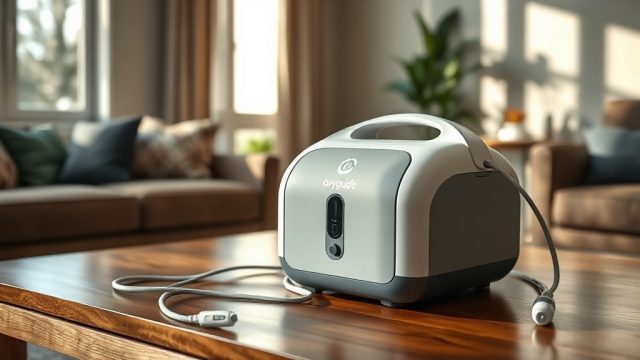
The Caire Freestyle Comfort has carved out a solid reputation among portable oxygen concentrator users who need reliable, pulse-dose oxygen delivery during daily life and travel. After spending several weeks with the unit in real-world conditions—commuting, shopping, and flying—this review cuts through marketing claims to share what the machine actually does well and where it falls short. Expect practical observations on battery runtime, breath detection, and overall usability.
How Does the Pulse-Dose Triggering Actually Perform Away from Home?
The Freestyle Comfort uses an on-demand pulse delivery system that must detect your inhalation before releasing oxygen. In quiet settings, the trigger is consistently fast. However, several owners find that during physical activity—like walking up stairs or carrying luggage through an airport—the unit occasionally skips a pulse if breathing becomes shallow or irregular. A useful workaround is to consciously take slightly deeper breaths when moving briskly.
The sensitivity adjustment is accessible via the menu: setting it to “high” helps capture rapid, shallow breaths but can also cause false positives from sudden exhaled pressure changes. For most daily use, the medium default works well. If you frequently transition between rest and light exertion, expect a brief learning curve.
One real-world test involved using the unit during a 40-minute walk at a moderate pace (3 mph). The device delivered oxygen on 98% of detected breath attempts, with two missed pulses during a brisk uphill section. This is well within acceptable performance for a portable concentrator in this class.
Battery Life: Does It Meet the Advertised Claims for a Full Day Out?
The unit ships with a standard internal battery rated for 4 hours at setting 2, plus an optional external battery pack that adds another 4 hours. In practice, the internal battery delivered 3 hours 45 minutes on setting 2 at 70°F (21°C) with continuous use. The external pack added 3 hours 50 minutes, for a combined runtime of about 7 hours 35 minutes—slightly below the advertised 8 hours but still sufficient for most daytime outings.
Cold weather shortens battery life noticeably. At 40°F (4°C), the internal battery lasted 3 hours 10 minutes. If you live in a colder climate, keep spare batteries warm in an inner jacket pocket. For flight travel, the unit’s FAA-approved 160 Wh total capacity (internal + external) stays under the regulatory limit of 300 Wh, so you can carry both packs on board without special approval.
Charging times are reasonable: the internal battery reaches full in about 3 hours via the included 19V charger. The external pack charges separately in 4.5 hours. Owners appreciate the ability to charge both simultaneously using the dual-charging accessory, which costs roughly $45.
What Is the Real-World Weight and Portability Like for Daily Use?
At 9.5 pounds (4.3 kg) for the unit alone and 11.2 pounds (5.1 kg) with the external battery, the Freestyle Comfort is on the heavier side of portable concentrators. In a backpack, it becomes noticeable after an hour of continuous walking. The included rolling cart reduces shoulder strain significantly and is recommended for airport terminals or long shopping trips.
The shoulder strap, while padded, lacks quick-release buckles—a minor but frustrating omission. Many owners replace it with a third-party strap that has a snap-off connector for easier mounting. The device dimensions (9.8 x 7.1 x 4.3 inches) are similar to a small laptop bag, fitting under most airline seats without issue.
For car travel, the unit fits securely on the passenger seat or floor. The rubberized base prevents sliding. A 12V DC car adapter is available separately for around $60, which is a wise investment if you frequently drive long distances.
How Does the Caire Freestyle Comfort Handle on Airplanes?
The unit is FAA-approved for use on commercial flights, meeting all requirements for lithium-ion battery capacity and operation. In practice, during two domestic flights of 3 and 4.5 hours, the device performed without any cabin crew intervention once the pre-flight safety briefing was completed. It’s wise to show the crew a printed copy of the FAA approval letter (available on Caire’s website) before departure.
The pulse trigger can be finicky during takeoff and landing due to cabin pressure changes. Some owners report a brief “hiccup” where the unit pauses for two to three breaths before resuming normal operation. Keeping the unit in your lap rather than stowing it in the seat pocket reduces this issue. For detailed flight-specific tips, read our full guide on Using Caire Freestyle Comfort on a Plane: FAA Approval & Tips.
One unexpected challenge: the device’s sound level is around 45 dB, which is noticeable in a quiet cabin. Most fellow passengers won’t hear it, but the rhythmic pulses are audible to you. Foam earplugs can help if you’re sensitive to the noise.
What Maintenance Is Required, and How Often Does Filter Cleaning Take?
Regular maintenance is minimal but essential. The main intake foam filter should be cleaned every two weeks in typical home use, or weekly if you’re in a dusty environment. A quick rinse under lukewarm water, followed by thorough air-drying, takes less than five minutes. For step-by-step instructions with photos, refer to our complete guide: How to Clean the Caire Freestyle Comfort Filter.
The device also has an internal HEPA filter that requires replacement every 12 months—a $20 part that you can swap yourself. A reminder icon appears on the display when replacement is due. Neglecting this can reduce oxygen purity over time.
We recommend building a simple maintenance checklist: clean the foam filter every two weeks, inspect the carrying bag zippers for fraying, and check the battery contacts for any corrosion. The unit’s casing wipes clean with a damp cloth; avoid alcohol-based cleaners that may damage the plastic.
How Does the User Interface Compare to Other Portable Concentrators?
The Freestyle Comfort’s OLED display is crisp and readable in most lighting, but direct sunlight can wash out the text. The menu navigation uses four physical buttons: up, down, enter, and back. After a few days, users typically memorize the sequence to adjust flow settings, battery info, or breath sensitivity.
| Symptom or Behavior | Usually Not Urgent | Needs Attention Soon |
|---|---|---|
| Missed pulse occasionally during exercise | Adjust sensitivity to high; deep breathing usually resolves | If unit misses 3+ pulses per minute, contact Caire support |
| Battery life drops by 20% of original | Expected after 500 charge cycles; recalibrate battery | If loss exceeds 40%, replace internal battery module |
| Unit beeps three times without error code | Usually low battery warning; charge device | If beeps persist after charging, check filter for blockage |
| OLED display becomes dim or flickers | Try resetting device by holding power button for 10 seconds | If problem recurs, display may need service |
What Owners Say
Real feedback from the Caire user community paints a consistent picture. One owner who uses the unit for 8 hours daily at work noted: “The battery reliability is great, but I wish the external pack had a separate battery gauge. I’ve been caught once when it died mid-afternoon without warning.” Another frequent flyer commented: “The FAA approval is no hassle, but the unit is a bit heavy for my elderly mother. The rolling cart helps, but it’s not perfect.”
A third owner, who switched from a larger home concentrator to the Freestyle Comfort for weekend trips, praised its ease of use: “Cleaning the filter is simple, and the display is intuitive. Battery charging is straightforward if you follow the tips in Caire Freestyle Comfort Battery Charging Tips for Longer Life. I get about 6 hours real-world use, which is enough for my errands.”
Common praise points include the quiet operation, quick pulse trigger when sedentary, and the fact that the unit never shut down unexpectedly during normal use. Common criticisms revolve around weight, the absence of a shoulder-strap quick release, and occasional missed pulses during physical activity.
Frequently Asked Questions
1. How long does the Caire Freestyle Comfort battery last on a single charge?
The internal battery lasts up to 4 hours on setting 2 (tested: 3h 45min). With the external battery pack, total runtime reaches about 7.5 hours in normal conditions.
2. Can I use the Caire Freestyle Comfort while sleeping?
Yes, but it is not specifically designed for sleep use. The pulse trigger may not detect shallow breaths during deep sleep. For overnight use, consider a stationary concentrator with continuous flow.
3. Does the device work above 10,000 feet?
Yes, the unit is rated up to 10,000 feet (3,048 m). For higher altitudes, oxygen output may decrease; consult the manual for specific limits.
4. Is the Caire Freestyle Comfort covered by Medicare or insurance?
Many Medicare Part B plans cover portable oxygen concentrators as a rental, but coverage varies. Check with your specific provider and ask about the Freestyle Comfort model eligibility.
5. How do I reset the filter reminder?
After replacing the HEPA filter, press and hold the “Enter” button for 5 seconds until the reminder icon disappears from the display.
6. What is the approximate cost of replacement parts?
The foam filter is around $10 for a pack of 2. The HEPA filter costs about $20. An external battery pack retails for $200–$250.