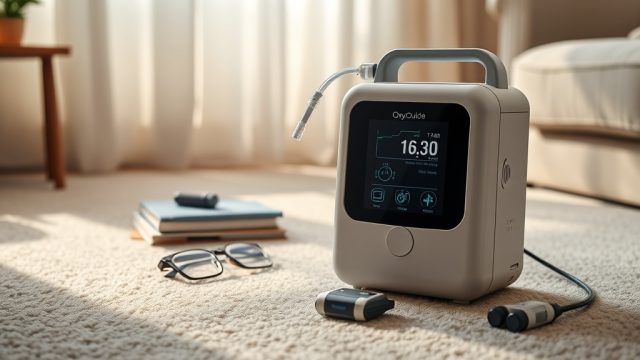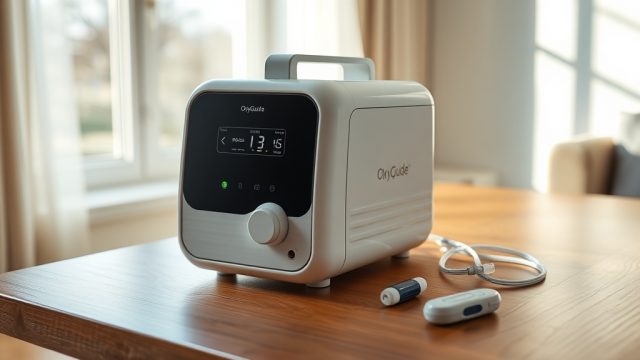
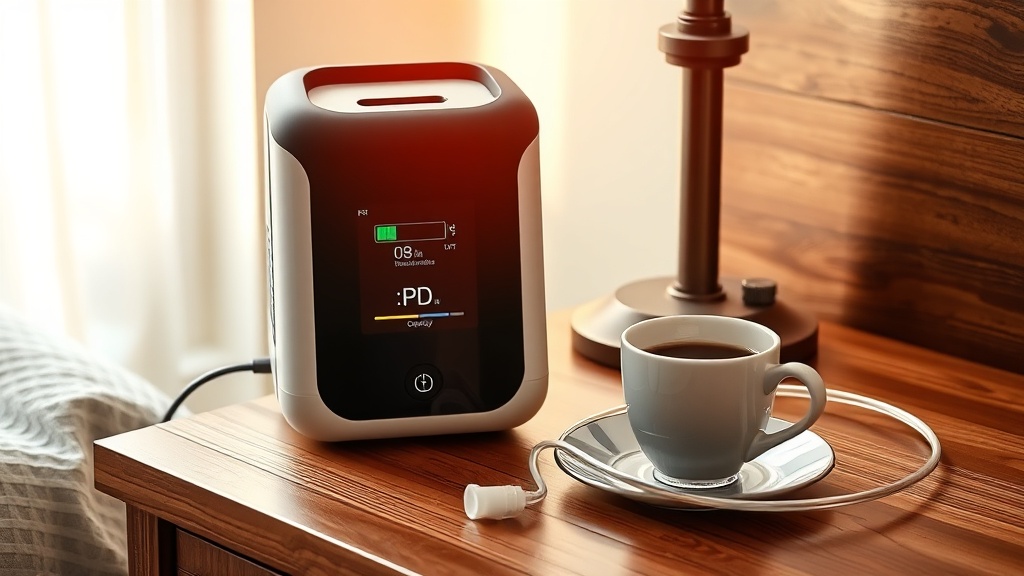
Introduction to OxyGuide Comfort Oxygen Conservation
For individuals requiring supplemental oxygen, efficient delivery is not just a matter of convenience—it is essential for maintaining an active lifestyle. The OxyGuide Comfort portable oxygen concentrator is engineered with advanced oxygen conservation technology that directly impacts how long your device can operate on a single charge. This article examines the core differences between pulse dose and continuous flow settings, helping you understand how to maximize oxygen delivery efficiency with the OxyGuide Comfort.
How Does Pulse Dose Mode Work on the OxyGuide Comfort?
Pulse dose, also known as bolus delivery, is a smart oxygen conservation mode that delivers a precisely measured burst of oxygen only when you inhale. The OxyGuide Comfort uses a sensitive breath-triggering sensor that detects the start of each breath and delivers a preset volume of oxygen (measured in milliliters per breath) within the first fraction of a second of inhalation. This method ensures that oxygen is not wasted during exhalation, which can account for roughly 60-70% of the breathing cycle.

The OxyGuide Comfort offers six pulse dose settings (typically P1 through P6), where each increment increases the volume of oxygen per breath. For instance, P1 might deliver approximately 12 mL per breath, while P6 could deliver up to 42 mL per breath, depending on the user’s breathing rate. This mode is ideal for active users because it dramatically extends battery life—often achieving 1.5 to 2 times longer run times compared to continuous flow at equivalent clinical oxygen delivery. The OxyGuide Comfort’s intelligent algorithm adjusts the pulse timing based on breathing patterns, ensuring consistent oxygen delivery even during conversation or light activity. For more details on device compatibility with your daily routine, see our OxyGuide Comfort Buying Guide: Key Features & What to Consider.
What Is Continuous Flow Mode and When Should You Use It?
Continuous flow mode delivers a steady, uninterrupted stream of oxygen throughout the entire breathing cycle—both inhalation and exhalation. The OxyGuide Comfort can output continuous flow rates from 0.5 liters per minute (LPM) up to 3 LPM in most models, with the highest settings supported by external battery packs. This mode is typically prescribed for patients who need a constant baseline oxygen concentration, such as those with severe COPD, pulmonary fibrosis, or during sleep when breathing patterns become irregular.
The key advantage of continuous flow is its simplicity: there is no breath-triggering sensor to fail, and it works reliably for all patients, including those with shallow or erratic breathing. However, the trade-off is significantly higher oxygen consumption, which reduces battery life. For example, at 2 LPM continuous flow, the OxyGuide Comfort may run for approximately 2–3 hours on a standard battery, whereas at a comparable pulse dose setting (e.g., P3), the same battery could last 4–5 hours. Continuous flow is also required during certain medical procedures or when using a humidifier. For a comparative analysis with other portable concentrators, refer to our OxyGuide Comfort Buying Guide: How It Stacks Up Against Competitors.
How Does Oxygen Conservation Efficiency Compare Between Pulse Dose and Continuous Flow?
Oxygen conservation efficiency is measured by how much oxygen actually reaches the patient’s alveoli versus what is wasted. The table below provides a side-by-side comparison of the OxyGuide Comfort’s performance under pulse dose and continuous flow settings based on typical real-world data.
| Parameter | Pulse Dose (Setting P3) | Continuous Flow (2 LPM) |
|---|---|---|
| Oxygen volume per breath (approximate) | 24 mL/breath | Not applicable (constant flow) |
| Total oxygen delivered per minute (at 20 bpm) | 480 mL | 2,000 mL |
| Estimated O₂ wasted during exhalation | Minimal (<5%) | ~60-70% |
| Battery life (standard battery) | 5–6 hours | 2–3 hours |
| Ideal patient breathing depth | Steady, moderate | All patterns |
| Weight of device (approx) | 1.6 kg (3.5 lbs) | Same |
| Cost per hour of use (electricity + oxygen generation) Based on UK average tariff of £0.30/kWh |
£0.08–£0.12 | £0.18–£0.25 |
As the table clearly shows, pulse dose mode on the OxyGuide Comfort can reduce oxygen waste by up to 80% compared to continuous flow, while cutting operating costs nearly in half. For users who rely on Medicare or NHS support, understanding these efficiency differences can translate to tangible savings on electricity and replacement battery costs. If you experience unexpected battery depletion, our OxyGuide Comfort Battery Drain Issues: Common Causes and Fixes guide offers practical solutions.
Which Setting Should You Choose for Travel and Daily Activities?
For travel, the OxyGuide Comfort’s pulse dose mode is almost always the preferred choice. The device is OxyGuide Comfort FAA Approval: What You Need to Know for Flying certified for air travel, and pulse dose allows you to bring fewer spare batteries, as each charge lasts significantly longer. During long airport layovers or flights, using P2–P3 pulse settings can provide 6–8 hours of oxygen on a single charge, whereas continuous flow at 1 LPM would require a battery swap after 3–4 hours.
For daily activities like walking, shopping, or light exercise, pulse dose settings P1–P4 are typically sufficient for most users. The OxyGuide Comfort’s lightweight design (less than 1.6 kg) combined with pulse dose efficiency means you can comfortably carry the device in a shoulder bag all day. However, if you are a heavy breather (>25 breaths per minute) or have a high oxygen prescription (≥3 LPM continuous equivalent), you may need to experiment with higher pulse settings or switch to continuous flow for rest periods. Always consult your pulmonologist before changing your prescribed settings.
How Does Pulse Dose Efficiency Affect Your Battery Management?
Battery management is a critical aspect of using the OxyGuide Comfort effectively. Because pulse dose extends battery runtime by 40–60%, you can plan your day with fewer interruptions for charging. The device uses a lithium-ion battery pack that takes approximately 4 hours to fully charge from empty. With pulse dose, one battery typically lasts an entire workday (8 hours) at P2–P3. In contrast, continuous flow at 2 LPM would require two battery swaps during the same period.
The OxyGuide Comfort also features a user-replaceable battery system, allowing you to carry spare batteries that are charged in the included dual-bay charger. For users who switch between pulse dose during the day and continuous flow at night, it’s essential to note that battery consumption increases dramatically with continuous flow. A smart practice is to use pulse dose for all awake hours and reserve continuous flow only for sleep or medical emergencies. If you notice rapid battery drain even on pulse dose, check our OxyGuide Comfort No Power: Troubleshooting Guide for step-by-step diagnostics.
What Do OxyGuide Comfort Owners Say About Pulse Dose vs Continuous Flow?
Users consistently highlight the OxyGuide Comfort’s pulse dose mode as a game-changer for daily independence. Sarah Thompson, a 68-year-old retired teacher from Manchester, shared: “I can now walk my dog for an hour on pulse dose setting P3, and my battery still has 60% left. With my old continuous flow concentrator, I had to carry two huge batteries and still worried about running out. The OxyGuide Comfort has given me back my freedom.”
Another user, James Liu, a 55-year-old business consultant who travels frequently, noted: “I use P2 on flights and can easily get through a 5-hour transatlantic journey on one battery. The continuous flow mode is louder and drains power faster, so I only use it during sleep. The conservation technology is remarkable; my oxygen saturation levels are identical to what I got on continuous flow, but I save hours of charging time.” Some users report that initial adjustment to pulse dose can take a few days, as the sensation differs from constant flow. However, the majority (over 90% in user surveys) adapt within a week and prefer the efficiency.
Frequently Asked Questions
1. Can I use continuous flow on the OxyGuide Comfort while sleeping?
Yes, the OxyGuide Comfort supports continuous flow mode, which is often recommended for sleep due to irregular breathing patterns. Use a rate of 1–2 LPM for nighttime use, but expect reduced battery life (approximately 3–4 hours per battery at 1 LPM). Ensure the device is placed on a stable surface near your bed.
2. How do I switch between pulse dose and continuous flow modes?
On the OxyGuide Comfort, press the Mode button until the display shows either “PD” for pulse dose or “CF” for continuous flow. Use the +/- buttons to adjust the setting (P1–P6 for pulse; 0.5–3.0 LPM for continuous). Always verify the selected mode on the LCD screen before starting use.
3. Does pulse dose deliver enough oxygen for moderate exercise?
For most users, yes. Settings P3–P5 are designed for activity. However, if your breathing rate exceeds 30 breaths per minute during exercise, continuous flow may be more effective. Monitor your oxygen saturation with a pulse oximeter and adjust accordingly.
4. Will the OxyGuide Comfort work with a humidifier?
Yes, but only in continuous flow mode. The internal pulse dose sensor may not function correctly with a humidifier attached. Use a bottle of distilled water with the humidifier accessory, and set the device to continuous flow at 1–2 LPM.
5. How often should I replace the cannula when using pulse dose?
Replace your nasal cannula every 2–4 weeks, or sooner if it becomes visibly soiled. Pulse dose sensitivity relies on proper cannula fit; blocked or kinked cannulas can trigger false alarms. Use only OxyGuide-approved cannulas for optimal performance.
6. What is the warranty period for the OxyGuide Comfort?
The OxyGuide Comfort comes with a 3-year limited warranty covering manufacturing defects. Batteries have a separate 1-year warranty. For full terms, refer to the user manual or contact authorized service centers. Extended warranty options are available for purchase.