
OxyGuide Comfort Battery Drain Issues: Common Causes and Fixes
If you rely on the OxyGuide Comfort for daily oxygen therapy, a rapidly draining battery can disrupt your routine and cause anxiety. Many users report that the device’s battery performance doesn’t always match expectations, particularly after months of regular use. This article explores the most frequent causes of battery drain on the OxyGuide Comfort and provides actionable fixes to help you maximize uptime.
Why Is My OxyGuide Comfort Losing Charge Faster Than Expected?
One of the first signs of battery trouble is when the OxyGuide Comfort lasts significantly less than its advertised 4–6 hours on a full charge. Several factors contribute to premature drain, including flow setting, ambient temperature, and battery age. At the highest pulse setting (flow 6), the unit may consume power twice as fast as at setting 2. Additionally, cold environments below 10°C (50°F) can reduce battery capacity by 20–30%.
To check if your usage pattern is the culprit, compare your actual runtime with the chart below:
| Flow Setting | Expected Runtime (new battery) | Expected Runtime (1-year-old battery) |
|---|---|---|
| Pulse 2 | 6 hours | 4–5 hours |
| Pulse 4 | 4.5 hours | 3–3.5 hours |
| Pulse 6 | 3 hours | 2–2.5 hours |
| Continuous 2 L/min | 2 hours | 1.5 hours |
If you consistently charge the battery before it is fully depleted, this can also reduce overall lifespan. For more background on choosing the right model, see the OxyGuide Comfort Buying Guide: Key Features & What to Consider.
Could a Faulty Charger or Charging Cable Be the Problem?
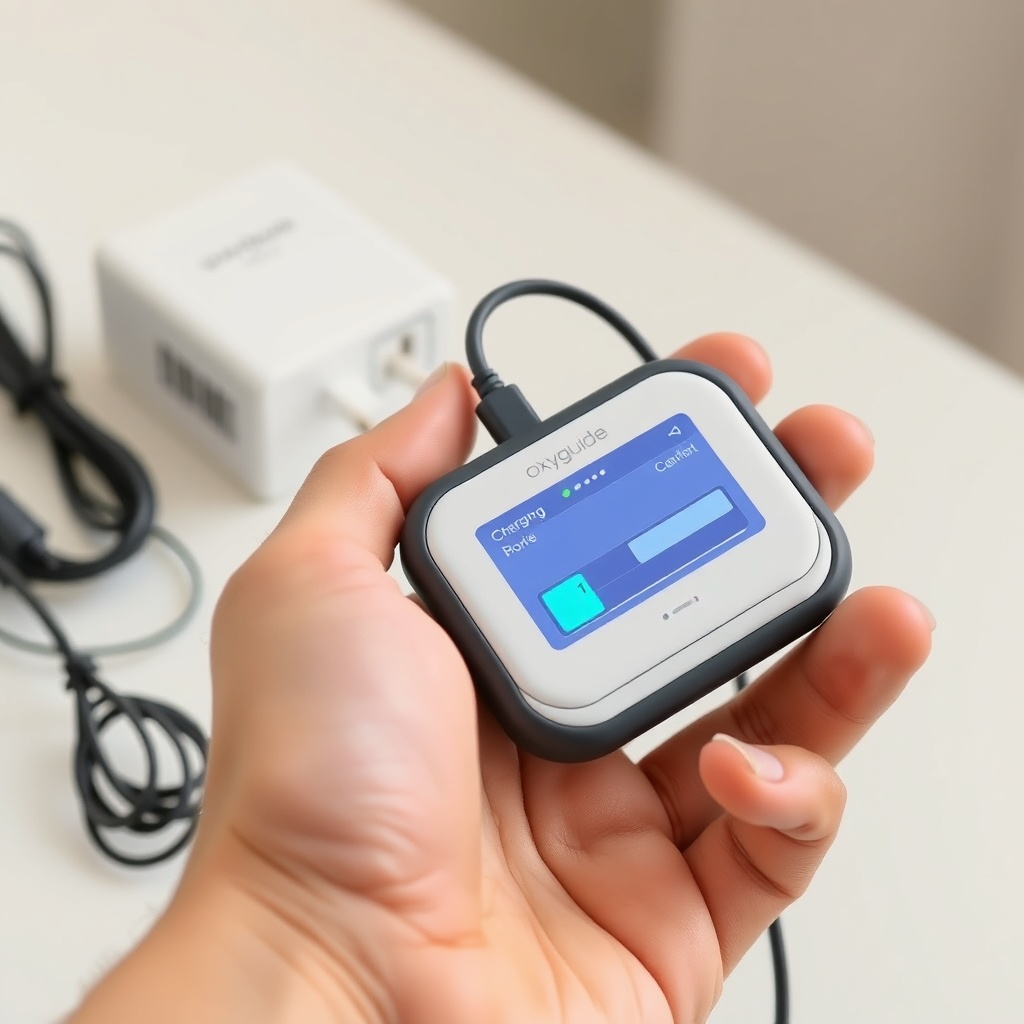
A less obvious cause of battery drain is a damaged charger that doesn’t deliver full power. Many users assume the battery is failing, but the issue may be with the charging accessories. The OxyGuide Comfort uses a 19V DC adapter; if the cable is frayed or the adapter unit is buzzing, it may not charge the battery completely.
Check for these signs:
- The charging LED on the unit flashes rapidly or stays red for more than 6 hours.
- The battery gets hot during charging (above 45°C).
- You notice a burning smell from the adapter.
If you encounter any of these, replace the adapter and cable immediately. Using a third-party charger without the correct voltage can permanently damage the battery. For complete power-related troubleshooting, refer to the OxyGuide Comfort No Power: Troubleshooting Guide.
Is the Battery Management System (BMS) Miscalibrated?
Modern lithium-ion batteries in the OxyGuide Comfort rely on a Battery Management System to track charge levels. Over time, the BMS can lose calibration, especially if the battery is frequently partially charged. This may cause the device to show 20% charge but shut down unexpectedly after a few minutes.
To recalibrate, perform a full discharge cycle: use the unit until it powers off completely, then charge it uninterrupted to 100% (leave it charging for at least 2 hours after the LED turns green). Repeat this cycle once a month. If the issue persists after two cycles, the battery cells may be degraded and a replacement is necessary.
How Does Pulse vs. Continuous Flow Affect Battery Life?
The OxyGuide Comfort offers both pulse dose and continuous flow modes. While pulse mode is designed to conserve oxygen by delivering a burst only during inhalation, continuous flow mode runs the compressor constantly. Users who switch to continuous flow often see battery life drop by 40–60%. For example, at continuous 2 L/min, you may get only 2 hours of runtime versus 6 hours on pulse 2.
If you require continuous flow, consider carrying a spare battery or a portable power bank certified for the device. Some owners also note that using the device in pulse mode at the highest setting (pulse 6) actually uses more power than continuous 2 L/min—so check your specific needs. For a detailed comparison with other portable concentrators, read the OxyGuide Comfort Buying Guide: How It Stacks Up Against Competitors.
What Owners Say: Real Battery Experiences with the OxyGuide Comfort
Based on user forums and product reviews, here are common battery-related complaints and solutions shared by OxyGuide Comfort owners:
- “My battery only lasts 2 hours now, and I use pulse 4.” – Many owners find that after 18 months of daily use, the battery capacity degrades by 30–40%. A new OEM battery costs around £120 and restores full runtime.
- “The battery indicator shows full, but the unit dies after 30 minutes.” – This usually indicates a BMS calibration issue. A full discharge-recharge cycle resolved it for several users.
- “I left my OxyGuide Comfort in the car on a cold night, and now it runs for half the time.” – Cold temperatures cause temporary capacity loss. Warming the battery to room temperature (20°C) before use often restores normal runtime.
- “Using a generic power bank made my battery drain faster.” – Third-party chargers can supply inconsistent voltage, confusing the BMS. Stick to the official adapter.
For users who travel frequently, battery management is especially critical. Check the OxyGuide Comfort FAA Approval: What You Need to Know for Flying for guidelines on carrying spare batteries aboard aircraft.
How Often Should I Replace the OxyGuide Comfort Battery?
The OxyGuide Comfort uses a lithium-ion battery with a typical lifespan of 300–500 charge cycles. For a user who charges daily, this translates to roughly 1–1.5 years. Signs that replacement is needed include:
- Runtime drops below 50% of the original specification.
- The battery swells or deforms (stop using immediately).
- The unit shuts down randomly even with a “full” charge.
The official replacement battery costs approximately £150–£180 and is covered by a 12-month warranty. Avoid third-party batteries as they may lack proper overcharge protection. A new battery can extend the life of your OxyGuide Comfort for several more years, making it a worthwhile investment compared to buying a new unit.
Frequently Asked Questions
1. Can I use the OxyGuide Comfort while it is charging?
Yes, the device supports pass-through charging, meaning you can use it while plugged into a wall outlet. However, the battery will charge more slowly if the unit is in continuous flow mode. For best results, charge the battery separately whenever possible.
2. Why does my OxyGuide Comfort battery drain when not in use?
Lithium-ion batteries self-discharge at about 2–5% per month. If you store the device for more than a few weeks, the battery may drop to 70–80% charge. To minimize drain, store the battery at 40–60% charge in a cool, dry place (15–20°C).
3. Does using the OxyGuide Comfort in pulse mode always save battery?
Generally yes, but only at lower pulse settings. At pulse 6, the compressor works harder to deliver a large bolus, consuming almost as much energy as continuous 2 L/min. For best battery life, use the lowest effective flow setting.
4. How do I clean the battery contacts on the OxyGuide Comfort?
Dirty contacts can cause poor electrical connection, leading to faster drain. Use a cotton swab lightly moistened with isopropyl alcohol to clean both the battery terminals and the unit’s connector. Ensure they are dry before reassembly.
5. Is it safe to leave the OxyGuide Comfort plugged in overnight?
Yes. The device has an automatic cutoff when the battery reaches 100% charge. However, frequent overnight charging without full discharge cycles can shorten battery lifespan. Aim to discharge to at least 20% every few weeks.
6. Can I replace the OxyGuide Comfort battery myself?
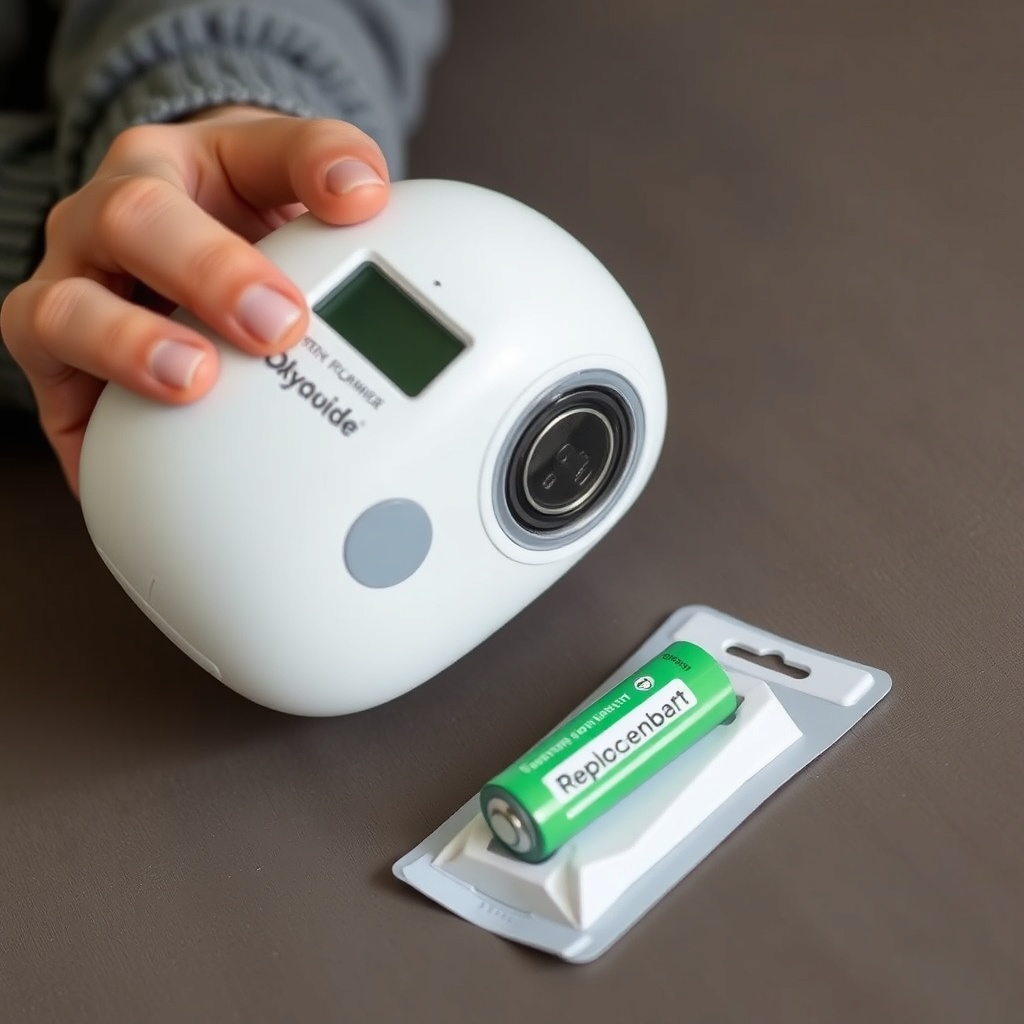
Yes, the battery is user-replaceable. Slide the release latch, remove the old battery, and snap in a new one. No special tools are required. Always use an official replacement to avoid voiding the warranty.