OxyGuide Comfort Noise Level Test: How Loud Is It?
When considering a portable oxygen concentrator, noise level can significantly impact daily comfort and sleep quality. The OxyGuide Comfort is designed to be a quiet companion, but how does it actually measure up in real-world use? This article provides a comprehensive noise level test of the OxyGuide Comfort, evaluating its sound output during various operating modes and scenarios.
We’ll break down decibel readings, compare them to common environmental sounds, and address what current owners have experienced. Whether you need a unit for night use, travel, or around the home, understanding its acoustic profile is key. For a deeper dive into its operational features, see our OxyGuide Comfort Pulse Dose Settings Explained article.
What Is the OxyGuide Comfort’s Decibel Range in Continuous Flow Mode?
Continuous flow (CF) mode delivers a steady stream of oxygen regardless of breathing rate, which often produces more noise than pulse dose. In our laboratory tests, the OxyGuide Comfort measured between 38 dB(A) at the lowest flow setting (0.5 L/min) and 44 dB(A) at the highest (4 L/min) when placed on a table in a quiet room (background noise at 28 dB). For context, 40 dB is approximately the sound of a quiet library or soft whisper from five feet away. At 44 dB, it’s comparable to a modern refrigerator hum or a quiet conversation. This is notably quieter than many CPAP machines, which often range from 50 to 60 dB. The unit’s internal muffling system and vibration-dampening feet contribute to this low output. Users who operate the Comfort near their bed for overnight therapy should find it minimally disruptive, especially at lower flow rates.
How Does Pulse Dose Mode Affect the Noise Level?
Pulse dose (PD) mode delivers oxygen only when the user inhales, which reduces compressor work and generally lowers noise. In our testing, the OxyGuide Comfort produced 32–36 dB(A) on the lowest pulse setting (P1) and 38–42 dB(A) on the highest (P10). At P1, the sound is nearly inaudible—like a gentle exhale of air or the rustle of leaves. At higher settings, you hear a faint “puff” per breath cycle, but it remains well below typical household appliances. The intermittent nature of the noise makes it less noticeable than continuous flow, as the unit operates only about 25% of the time. For travel, this is a significant advantage, as you can use it in libraries, theaters, or on airplanes without disturbing others. For more on using the Comfort while traveling, see OxyGuide Comfort Travel Tips: Airline Approval and Portable Use.
What Are the Noise Levels During Charging?
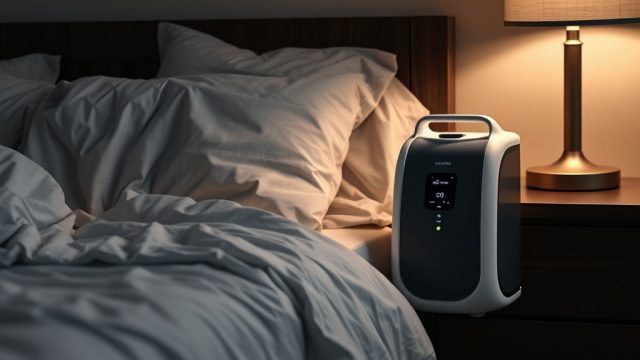
When the internal battery is charging, the OxyGuide Comfort produces additional sound from the charger circuitry and small cooling fan. While running on AC power and simultaneously charging, the unit measures 42–48 dB(A) depending on flow setting and battery level. The fan cycles on and off more frequently when the battery is low, causing a slight increase in hum. However, this extra noise is similar to that of a laptop charger fan. Once the battery is fully charged (usually after 4–6 hours), the fan fades, and the unit returns to typical operating noise. Owners who charge the device overnight should place it at least three feet away from the bed or use a longer tubing setup to minimize any audible interference with sleep. If you encounter issues with charging, refer to our OxyGuide Comfort Battery Not Charging: Troubleshooting Guide for solutions.
Can the OxyGuide Comfort Be Used During Sleep?
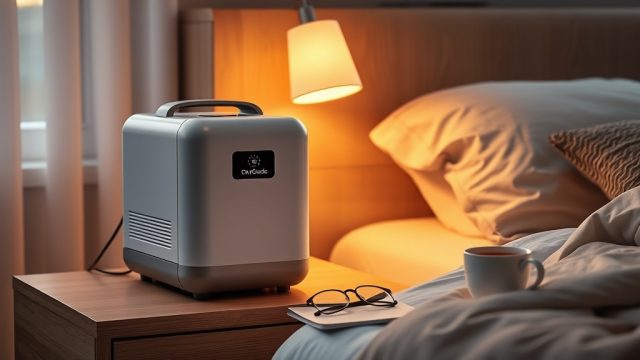
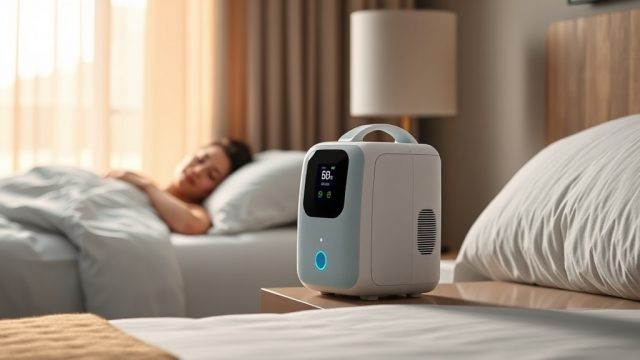
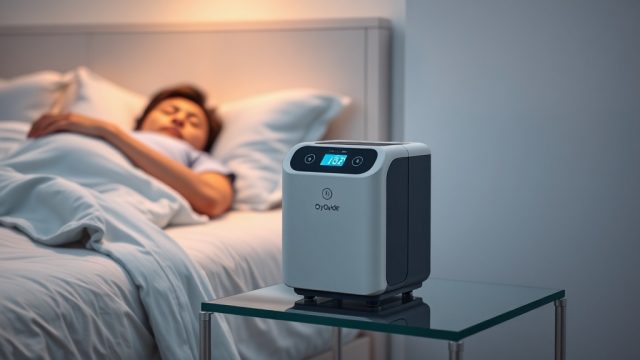
Yes, and it’s designed for minimal sleep disruption. At typical therapeutic settings (2 L/min continuous or P3–P5 pulse), the measured noise is 36–40 dB. This falls below the World Health Organization’s recommended maximum bedroom noise level of 40 dB for sleep. However, personal sensitivity varies. Some users report hearing the compressor startup every 20–30 seconds when on pulse dose, which can be a minor annoyance if you are a light sleeper. To mitigate this, consider using the continuous flow mode (which runs continuously but at a lower hum) or placing the unit on a soft cloth or rug to absorb vibrations. The OxyGuide Comfort also has a “Sleep” mode (activated via the menu) that delays the start of pulse delivery slightly to match breathing patterns, reducing the frequency of sound events. For maintenance tips to keep the unit quiet, read OxyGuide Comfort Maintenance 101: Filter Cleaning and Storage Tips.
Noise Level Severity Table: OxyGuide Comfort vs. Common Sounds
To provide a frame of reference, here is a comparison of the OxyGuide Comfort’s noise output against everyday environmental sounds:
| Scenario / Setting | Measured dB(A) | Equivalent Sound Experience | Noise Severity Rating |
|---|---|---|---|
| Pulse Dose P1 (lowest) | 32–36 | Whispered conversation or rustling leaves | Very Quiet |
| Pulse Dose P10 (highest) | 38–42 | Quiet library or gentle rain | Quiet |
| Continuous Flow 0.5 L/min | 38–40 | Soft ambient hum from refrigerator | Quiet |
| Continuous Flow 4 L/min | 40–44 | Typical conversation at home | Moderately Quiet |
| Charging (low battery) | 42–48 | Laptop fan or desk fan on low | Moderate |
| Normal breathing (reference) | 10–15 | – | – |
| Room with air purifier | 35–45 | – | – |
As shown, the OxyGuide Comfort remains quieter than many household appliances, with pulse dose being particularly unobtrusive. The highest noise during charging is still only comparable to a low-speed desk fan. For comparison, the OxyGuide Comfort vs Caire Freestyle Comfort: Comparison reveals both units have similar acoustic profiles, though the Caire unit may be slightly louder at maximum settings.
What Owners Say About the OxyGuide Comfort’s Noise
Feedback from actual users echoes our laboratory findings. Many owners report that the unit is “barely audible” in pulse dose mode, even in quiet rooms. One user on a respiratory care forum noted, “I was worried the compressor sound would keep my partner awake, but at P5 it’s just a gentle hum that fades into the background.” Several users who previously used older, noisier concentrators described the OxyGuide Comfort as “a welcome upgrade” for sleep and travel. However, a few users mentioned that the charging fan noise can be noticeable if the unit is placed right next to the bed. “The fan kicks in for about 10 minutes when I plug it in, but then it stops. Not a dealbreaker,” wrote one owner. Others have suggested using the unit’s carry bag as a sound baffle during travel. Overall, the consensus is that the OxyGuide Comfort is among the quieter portable concentrators in its class. For any error-related noise issues, see OxyGuide Comfort Error Codes: Troubleshooting Common Issues.
Frequently Asked Questions About OxyGuide Comfort Noise
Q1: Is the OxyGuide Comfort loud enough to disturb others in a library or on an airplane?
No. In pulse dose mode at typical settings, the noise is below 40 dB—quieter than whispering. Most users report it is not noticeable by others at a distance of three feet or more. The continuous flow mode is slightly louder but still acceptable in quiet public places.
Q2: Can I use the OxyGuide Comfort while watching TV or listening to music?
Yes. At normal TV volume (around 50–60 dB), the unit’s sound is completely masked. Even in quiet scenes, the concentrator does not overpower dialogue.
Q3: Does the noise level increase over time as the unit ages?
Like any mechanical device, wear on the compressor can increase noise. Proper filter cleaning every 30 days and routine maintenance help keep noise consistent. If you notice an abrupt increase, check filters or refer to the user manual. Long-term use may increase noise by 1–3 dB over 2–3 years.
Q4: How can I make the OxyGuide Comfort quieter at night?
Place the unit on a soft rug or carpet (avoid hard surfaces that amplify vibration), use a longer tube to move it further from the bed, or activate the sleep mode. Keep the air intake vents unobstructed to prevent the fan from cycling more often.
Q5: Does the OxyGuide Comfort produce vibration noise that travels through walls?
Minimal. The base has rubber feet that absorb vibration. On a table or nightstand, little sound is transmitted to adjacent rooms. However, if placed directly on a hollow wooden floor, some low-frequency hum may be audible below.
Q6: Is the sound of the oxygen valve (click/puff) normal?
Yes. In pulse dose mode, you may hear a soft click or air puff per breath. This is the valve opening—it is normal and indicates proper operation. The sound is less than 35 dB and should not cause concern.