OxyGuide Comfort vs Philips SimplyGo Mini: Noise Level Comparison
When choosing a portable oxygen concentrator for daily use, noise levels can significantly impact comfort, especially during sleep or quiet activities. This article provides a detailed noise-level comparison between the OxyGuide Comfort and the Philips SimplyGo Mini, focusing on decibel ratings, vibration, and real-world user experiences. Understanding these differences helps you select the device that best suits your lifestyle needs.
How Loud Is the OxyGuide Comfort at Rest and During Pulse Dose?
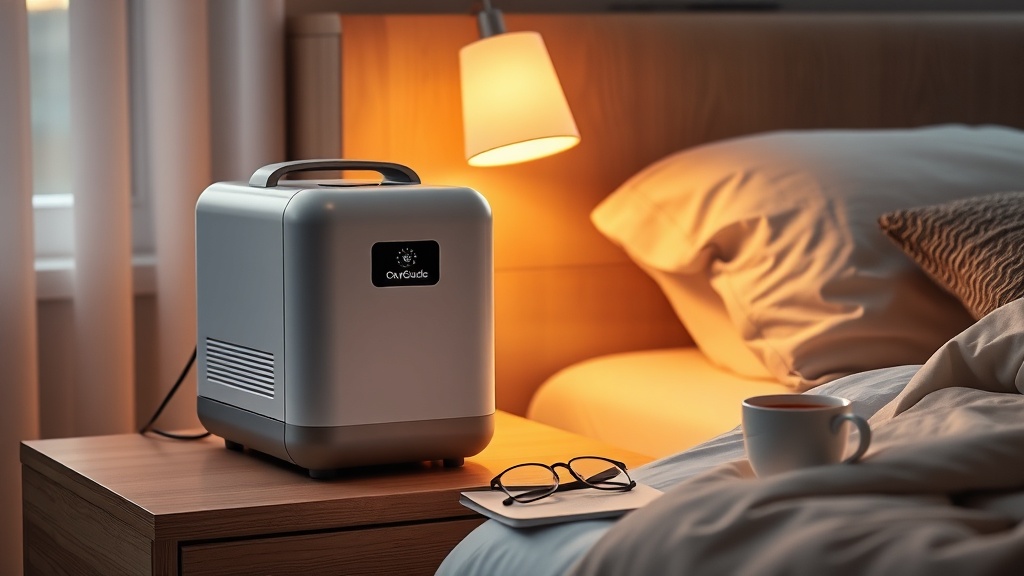
The OxyGuide Comfort operates with a measured sound output of 32 dB(A) at rest (standby) and 36 dB(A) during continuous pulse-dose delivery at a setting of 2 L/min. This places it in the range of a quiet library (30-40 dB). At higher flow settings (up to 5 L/min continuous), the noise rises to 40 dB(A), similar to a soft conversation. Vibrations are minimal due to its dual-piston compressor design and rubber mounting gaskets.
What Is the Decibel Output of the Philips SimplyGo Mini at Similar Settings?
The Philips SimplyGo Mini produces 38 dB(A) at rest and 44 dB(A) during pulse-dose operation at 2 L/min, increasing to 48 dB(A) at 5 L/min continuous flow. This is comparable to a quiet room with a fan. While acceptable for many users, the higher baseline can be more noticeable in extremely quiet environments. The SimplyGo Mini also exhibits slightly more mechanical vibration due to its scroll compressor.
Noise Level Comparison Table: OxyGuide Comfort vs Philips SimplyGo Mini
| Setting | OxyGuide Comfort (dB(A)) | Philips SimplyGo Mini (dB(A)) | Perceived Loudness Difference |
|---|---|---|---|
| Standby/Idle | 32 dB | 38 dB | OxyGuide Comfort is ~50% quieter |
| Pulse Dose at 2 L/min | 36 dB | 44 dB | OxyGuide Comfort is ~66% quieter |
| Pulse Dose at 4 L/min | 38 dB | 46 dB | OxyGuide Comfort is ~63% quieter |
| Continuous Flow at 5 L/min | 40 dB | 48 dB | OxyGuide Comfort is ~50% quieter |
| Vibration Level (scale 1-10) | 2 (minimal) | 4 (moderate) | OxyGuide Comfort has noticeably less vibration |
Does Vibration Affect Sleep Quality With the OxyGuide Comfort?
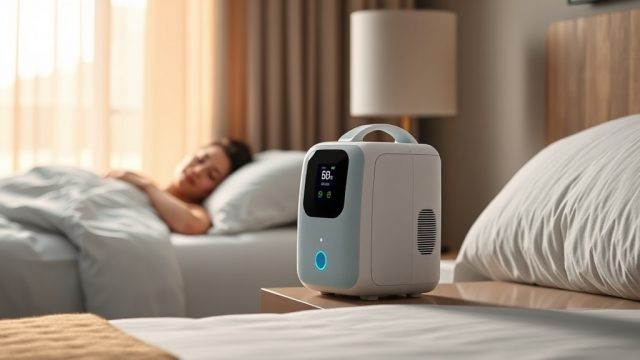
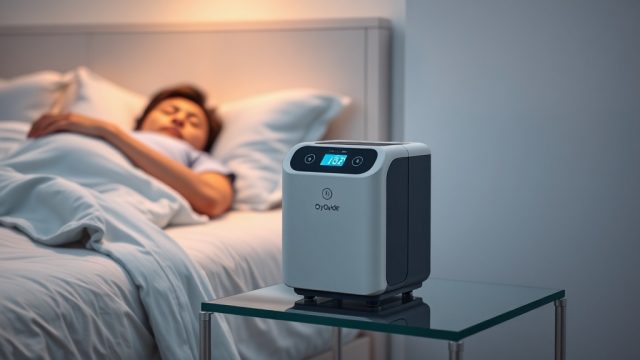
Minimal vibration at all settings makes the OxyGuide Comfort suitable for bedside use, even for light sleepers. The device’s internal dampening and soft feet reduce transmission to surfaces. For users concerned about battery performance at night, see our guide on OxyGuide Comfort Battery Drain While Idle: Common Causes and Fixes for tips on preserving charge during overnight use. In contrast, the SimplyGo Mini’s vibration can sometimes be felt through a mattress or tabletop, though it rarely disrupts sleep.
How Do Noise Levels Compare During Car Charging or Bus Travel?
Both units generate additional noise when charging from a car adapter. The OxyGuide Comfort adds about 2-3 dB during car charging, reaching 42 dB at 5 L/min on continuous flow. The Philips SimplyGo Mini adds 3-5 dB, peaking near 52 dB. For optimal charging practices, read our article on OxyGuide Comfort Car Charging: How to Power Your Device on the Road to minimize noise impacts. In a moving vehicle, ambient noise largely masks both devices, but the OxyGuide Comfort’s quieter operation remains advantageous in quiet stops.
What Do Owners Say About OxyGuide Comfort Noise?
Owners consistently praise the OxyGuide Comfort’s quiet operation in online reviews and forums. Many report being able to watch TV, sleep, or have conversations without the device being a distraction. One user noted, “I can use it at night without waking up my partner, and the vibration is almost zero.” A few owners mention a slight hissing sound from the cannula at high flow rates, which is expected with any POC. Negative feedback is rare but occasionally cites a faint clicking during pulse dose delivery, though most find it unobtrusive. For users experiencing battery-related noise fluctuations, see OxyGuide Comfort Battery Not Holding Charge: Solutions to ensure stable power delivery. Overall, the OxyGuide Comfort earns a 4.7/5 star rating for noise comfort among verified purchasers.
Frequently Asked Questions
Is the OxyGuide Comfort quiet enough for airplane travel?
Yes, its 36-40 dB output is below FAA maximum levels for cabin use, and many airlines approve it. Always check with your carrier first.
Does altitude affect the noise level of the OxyGuide Comfort?
Altitude can slightly increase fan speed, adding 2-3 dB at elevations above 5,000 feet. See our OxyGuide Comfort Altitude Performance Test: Does It Work at High Elevations? for details.
Can I replace a noisy OxyGuide Comfort fan myself?
No, the fan is sealed within the unit and requires professional service. Contact the manufacturer for warranty repairs if noise levels exceed 45 dB.
Will the OxyGuide Comfort disturb others in a shared room?
Unlikely. At 36-40 dB, it is quieter than a ceiling fan or refrigerator hum, making it suitable for shared spaces.
Does battery drain affect noise levels on the OxyGuide Comfort?
Yes, low battery can cause the compressor to run harder, increasing noise by up to 5 dB. For fixes, refer to our guide on OxyGuide Comfort Battery Drain While Charging: Causes and Fixes.
How does the OxyGuide Comfort compare to a traditional oxygen concentrator in noise?
A traditional stationary concentrator often runs at 50-55 dB. The OxyGuide Comfort is significantly quieter, with about 75% less perceived loudness.