Introduction: Making Air Travel with Oxygen Simple
Navigating airline regulations and ensuring consistent oxygen delivery during flights can be daunting for those reliant on portable oxygen concentrators. The OxyGuide Comfort has emerged as a trusted companion for travelers who value both reliability and portability. This article provides practical travel tips specifically for the OxyGuide Comfort, covering airline approval, battery management, and in-flight use, so that every journey remains safe and stress-free.
1. Is the OxyGuide Comfort FAA Approved for Air Travel?
Yes, the OxyGuide Comfort is fully FAA-approved for use on commercial aircraft. The unit has undergone rigorous testing to meet the Federal Aviation Administration (FAA) standards for portable electronic medical devices. Airlines typically require passengers to present a copy of the FAA approval letter, which is included in the user manual. It is always advisable to contact your airline at least 48 hours before departure to confirm their specific requirements, as some carriers may request additional documentation or advance notification.
For a detailed comparison of FAA-approved concentrators, see our review of OxyGuide Comfort vs Inogen One G5: Comparison to understand how each model performs in air travel.
2. How Many Batteries Do I Need for a Long Flight?
Battery life is the most critical factor during air travel. The OxyGuide Comfort uses a lithium-ion battery that provides up to 4.5 hours at pulse dose setting 2 (2 LPM equivalent). However, actual runtime varies based on the selected pulse dose settings explained. For a transatlantic flight lasting 8–10 hours, you will need at least two fully charged spare batteries. Most airlines allow a maximum of two spare batteries per passenger, each under 160 watt-hours. The OxyGuide Comfort battery is rated at 98 Wh, well within the limit. Always carry batteries in your carry-on luggage, never in checked baggage, as regulations prohibit lithium batteries in the cargo hold.
To estimate exact needs, use the following table based on your typical breathing rate and pulse dose setting:
| Pulse Dose Setting | Equivalent LPM | Battery Life (Hours) | Batteries Needed for 8-Hour Flight |
|---|---|---|---|
| 1 | 1.0 | 6.0 | 2 |
| 2 | 2.0 | 4.5 | 2–3 |
| 3 | 3.0 | 3.2 | 3–4 |
| 4 | 4.0 | 2.5 | 4 |
| 5 | 5.0 | 2.0 | 5 |
Always bring one extra battery beyond your calculated need for unforeseen delays. For maintenance tips on extending battery health, read OxyGuide Comfort Maintenance 101: Filter Cleaning and Storage Tips.
3. Can I Use the OxyGuide Comfort During Takeoff and Landing?
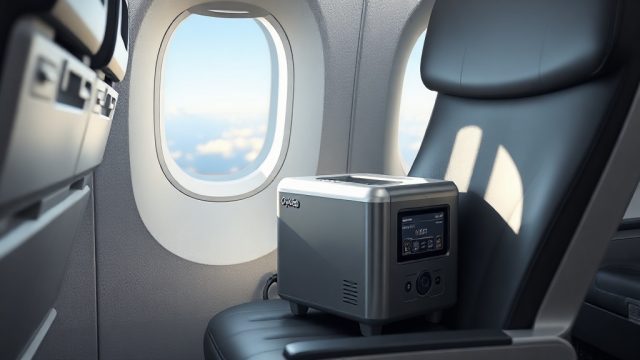
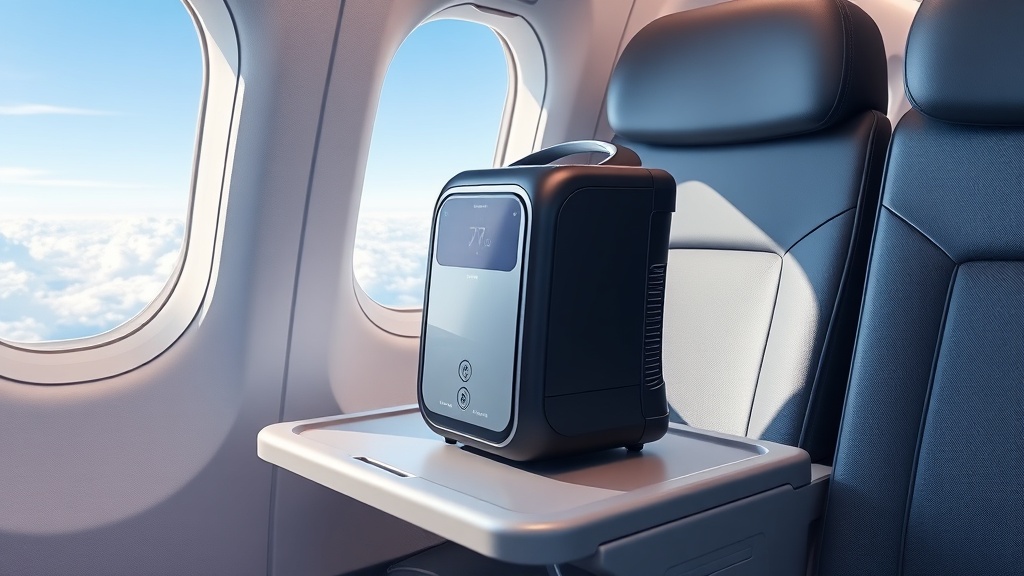
Yes, the OxyGuide Comfort is approved for use during all phases of flight, including takeoff and landing, provided the aircraft’s “fasten seat belt” sign is not illuminated during critical phases. However, airline policies vary. Some carriers require that the unit be stowed under the seat during taxi, takeoff, and landing, while others allow it to remain on your lap or in the seat pocket. To avoid confusion, inform the flight crew of your medical device and ask for their specific guidance. Keep the unit accessible and do not place it in overhead bins. The OxyGuide Comfort’s compact size (12” x 7” x 4”) makes it easy to stow under a standard seat.
For noise sensitivity, check our test results in How Quiet is the OxyGuide Comfort? Noise Level Test to ensure it won’t disturb fellow passengers.
4. What About In-Flight Charging and Power Options?
Most modern aircraft are equipped with in-seat power outlets (AC or USB). The OxyGuide Comfort can be charged using its standard AC adapter, which works with 100–240V power. However, the unit does NOT support USB charging, so you must use the provided AC cord. Some airlines offer medical device power outlets near bulkhead seats, but these are rare. It is safer to rely on battery power for the entire flight. If you do find an AC outlet, plug in your main battery first, then use spare batteries as needed. Note that charging the OxyGuide Comfort from a dead battery to full takes approximately 3 hours. For flights longer than 4 hours, carry a portable AC power bank (if allowed) for emergency top-ups. Always verify with the airline if power outlets are available, as not all aircraft have them.
5. What Are the Best Tips for Security Screening with the OxyGuide Comfort?
At security checkpoints, inform the TSA agent that you are carrying a medical device. The OxyGuide Comfort does not need to be removed from its carrying case; simply place it on the conveyor belt in its case. If the unit is not X-ray friendly, you may request a pat-down inspection. Always carry a printed copy of the FAA approval letter and a prescription from your doctor, as these may be requested. Do not disconnect the oxygen cannula during screening unless instructed. The device will not set off metal detectors, but the lithium battery may require separate screening. For international travel, check the destination country’s medical device regulations, as some require additional permits.
6. How Do I Transport the OxyGuide Comfort on the Plane?
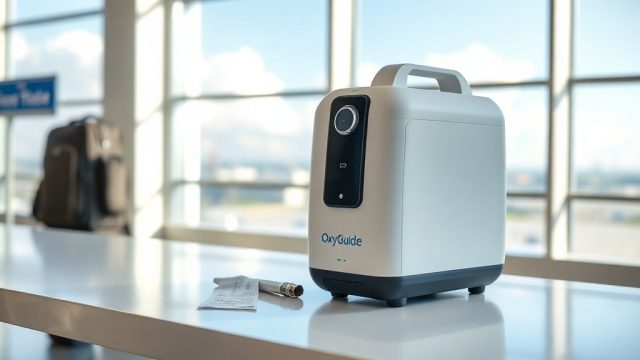
The OxyGuide Comfort comes with a padded carry bag that fits under the seat. Use the shoulder strap for hands-free transport through the airport. Avoid placing the unit in checked luggage due to battery restrictions. During boarding, notify the gate agent that you have a portable oxygen concentrator; some airlines allow pre-boarding for medical device users. Once seated, place the unit on the floor in front of you or in the seat pocket if there is no passenger next to you. Ensure the cannula tubing is not a tripping hazard. If you use a nasal cannula with a longer tube (up to 7 feet), it will not interfere with seatbelt use. For more on cannula compatibility, see OxyGuide Comfort vs Caire Freestyle Comfort: Comparison for recommendations.
What Owners Say About Traveling with the OxyGuide Comfort
Users consistently praise the OxyGuide Comfort for its reliability during trips. “I flew from New York to London with two spare batteries and had no issues. The unit never alerted low oxygen once,” says Margaret H., a 68-year-old traveler. Another user, James T., notes, “Security was a breeze—they just waved me through after seeing the FAA letter. The cannula stayed comfortable for the whole 9-hour flight.” Many owners appreciate the compact size, comparing it favorably to older models. However, some mention that the battery indicator could be more precise. For troubleshooting battery issues, refer to OxyGuide Comfort Error Codes: Troubleshooting Common Issues. Overall, the sentiment is that the OxyGuide Comfort transforms air travel from a worry into a manageable routine.
Frequently Asked Questions
Q1: Does the OxyGuide Comfort work with airplane oxygen systems?
No, the OxyGuide Comfort is a standalone device; it does not connect to aircraft oxygen systems. You must bring your own fully charged unit and batteries.
Q2: Can I use the OxyGuide Comfort while sleeping on a plane?
Yes, the unit has an automatic pulse dose mode that adjusts to your breathing, even during sleep. Test it beforehand at home to ensure comfort.
Q3: How do I clean the OxyGuide Comfort after travel?
Wipe the exterior with a damp cloth and mild soap. Do not submerge in water. For filter cleaning, see OxyGuide Comfort Maintenance 101: Filter Cleaning and Storage Tips.
Q4: What happens if my battery dies mid-flight?
Switch to your spare battery immediately. If both are dead, inform a flight attendant. Most aircraft have emergency oxygen masks but they are not for continuous use.
Q5: Is the OxyGuide Comfort allowed in the lavatory?
Use is discouraged due to confined space. The unit is too large for most lavatories. Ask the crew for assistance if needed.
Q6: Can I bring the OxyGuide Comfort internationally?
Yes, but check each country’s customs regulations for medical devices. Some require import permits. Keep your prescription and FAA letter handy.