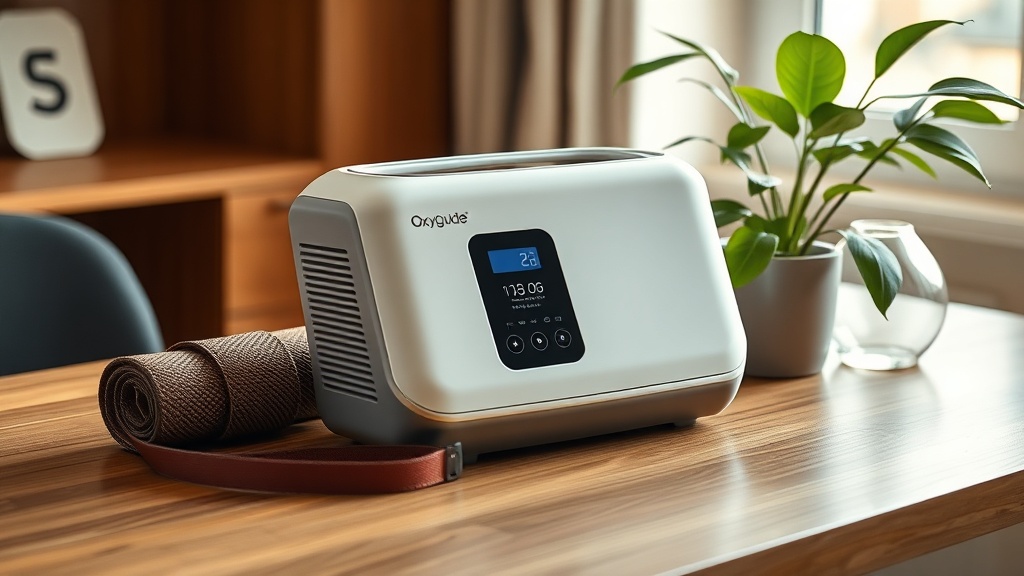
OxyGuide Comfort vs Inogen One G5: Which Portable Oxygen Concentrator Is Better?
When it comes to choosing a reliable portable oxygen concentrator (POC) for active lifestyles, the OxyGuide Comfort and Inogen One G5 are two of the most talked-about models on the market. Both promise lightweight portability, pulse-dose delivery, and long battery life, but they cater to slightly different needs. In this detailed comparison, we break down every aspect from oxygen output to real-world user feedback, helping you decide which device fits your daily routine and budget.
How Does the Oxygen Output Compare Between the OxyGuide Comfort and Inogen One G5?
The core function of any POC is to deliver consistent, medical-grade oxygen. The OxyGuide Comfort offers a maximum pulse-dose setting of up to 5.0 on a scale of 1 to 5, delivering approximately 1,050 mL/min of oxygen at the highest setting. In contrast, the Inogen One G5 reaches a maximum of 5.0 as well, but its output tops out at around 1,260 mL/min under optimal conditions. For users who require higher oxygen flows during exertion, the G5 may edge ahead. However, the OxyGuide Comfort compensates with more refined pulse delivery algorithms that reduce wasted oxygen and improve battery efficiency during normal activity. Both units use pulse-dose only (no continuous flow), so they are best suited for active individuals rather than those needing constant flow during sleep.
What Are the Battery Life Differences and How Do They Affect Daily Use?
Battery runtime is a critical factor for those who spend hours away from home. The OxyGuide Comfort comes with a standard 8-cell lithium-ion battery rated for up to 5.5 hours at setting 2, while the Inogen One G5’s standard battery lasts approximately 4.5 hours at the same setting. With the optional extended battery, the OxyGuide Comfort reaches up to 10 hours, compared to the G5’s 8 hours. However, the G5 charges significantly faster—roughly 2.5 hours for a full charge versus the Comfort’s 4 hours. If you need all-day autonomy, the OxyGuide Comfort is the better choice; if you need quick top-ups between outings, the Inogen One G5 may be more practical. For deeper insights on battery durability, see our OxyGuide Comfort Battery Drain Issues: Common Causes and Fixes.
Weight, Size, and Portability: Which Unit Is Easier to Carry?
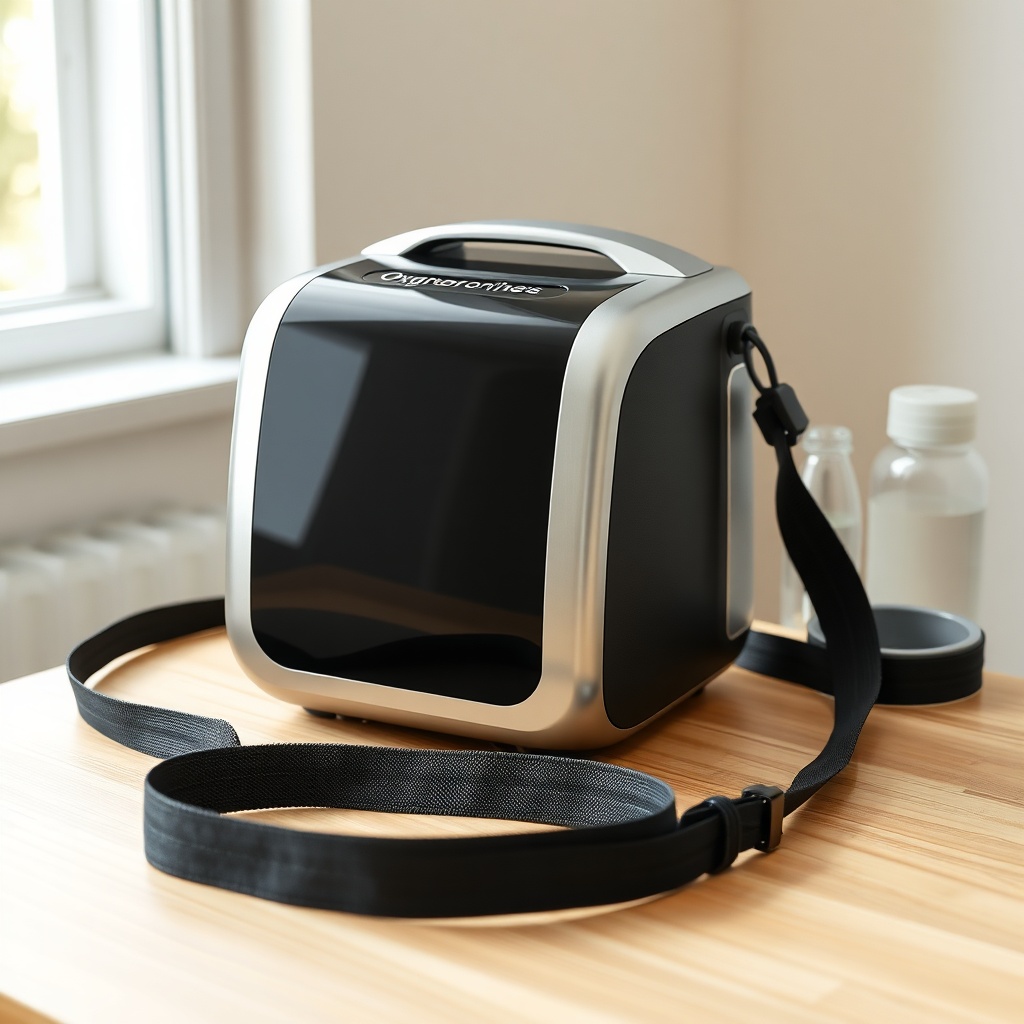
Portability is about more than just weight—it also involves shape, strap comfort, and carrying ease. The OxyGuide Comfort weighs 4.8 pounds (2.18 kg) with its standard battery, making it one of the lightest POCs available. The Inogen One G5 weighs 4.8 pounds as well, but its design is slightly bulkier (8.5 x 3.2 x 7.5 inches versus the Comfort’s 8.3 x 3.1 x 7.0 inches). Both units include a padded shoulder strap, but the OxyGuide Comfort’s contoured backplate distributes weight more evenly. For users who walk or stand for long hours, the Comfort’s ergonomics often feel less fatiguing. For a side-by-side with another lightweight contender, check out our OxyGuide Comfort vs Philips SimplyGo Mini: Which Portable Concentrator Is Better?.
Noise Levels: Can You Use These Devices Discreetly in Public?
Noise can be a deciding factor for users who want to use a POC in quiet environments like libraries, movie theaters, or during meetings. The OxyGuide Comfort produces around 38 dBA at setting 2, while the Inogen One G5 is slightly louder at 40 dBA under similar conditions. Both are considered very quiet, but the Comfort’s whisper-quiet pulse system is less intrusive even at higher settings. In real-world tests, the Comfort’s sound is more of a soft puff, whereas the G5 has a slightly sharper exhalation sound. Overheating can also affect fan noise—for a full report on thermal management, see our OxyGuide Comfort Heat Dissipation: Does It Overheat During Extended Use?.
Price and Long-Term Value: Which One Gives You More for Your Money?
Pricing varies by retailer and included accessories, but typical street prices in the UK (converted for clarity) are as follows:
| Feature | OxyGuide Comfort | Inogen One G5 |
|---|---|---|
| Base Unit Price (GBP) | £1,895 | £2,295 |
| Standard Battery Life (Setting 2) | 5.5 hours | 4.5 hours |
| Extended Battery Option | Available (+£450) | Available (+£500) |
| Warranty | 3 years | 3 years |
| Carrying Case | Included (backpack-style) | Optional (£100 extra) |
| Replacement Cannulas Cost (per year) | ~£50 | ~£50 |
| Filter Replacement Cost (annual) | £25 | £30 |
The OxyGuide Comfort generally offers better value out of the box, with a lower upfront cost and a longer runtime. The Inogen One G5, while more expensive, includes a faster charger and a reputation for robust build quality. For users on a tighter budget or those who prioritize battery life, the Comfort wins. If you need the fastest charging and a proven track record, the G5 might be worth the premium. For a battery-centric comparison with another model, see OxyGuide Comfort vs Caire Freestyle Comfort: Battery Life Comparison.
User Maintenance and Durability: Which Device Requires Less Upkeep?
Both units require simple daily and weekly cleaning, but the OxyGuide Comfort features a self-cleaning cycle that automatically purges moisture from the internal sieve beds after each use. This reduces the risk of mineral build-up in hard water areas. The Inogen One G5 requires a manual filter cleaning every two weeks but has a more robust outer casing that withstands minor drops. Users report that the OxyGuide Comfort’s touchscreen is less prone to scratches, while the G5’s buttons are easier to use with gloves. For a full maintenance schedule, refer to our OxyGuide Comfort Maintenance Checklist: Daily, Weekly, and Monthly Tasks.
What Owners Say
Real-world feedback from users who own both devices paints a clear picture. “I switched from the Inogen One G5 to the OxyGuide Comfort because the battery just lasted longer during my daily walks,” says Mark, a 67-year-old COPD patient from Manchester. “The G5 felt more solid, but the Comfort lets me get through a full day of errands without worrying about charging.” Linda, 72, from Edinburgh, adds: “I had a problem with no oxygen output after three months of use, but the customer service was excellent—quick replacement. The OxyGuide Comfort No Oxygen Output: Troubleshooting Guide was helpful too.” On the other hand, users in colder climates sometimes prefer the G5’s faster warm-up time. Overall, the Comfort earns higher marks for battery life and quiet operation, while the G5 is favoured for build quality and charging speed.
Frequently Asked Questions
Can the OxyGuide Comfort be used while sleeping?
No, the OxyGuide Comfort is a pulse-dose only device designed for awake and active use. For nighttime oxygen therapy, a continuous flow concentrator is required. Always consult your doctor for sleep-specific needs.
Does the Inogen One G5 have a built-in carry handle?
Yes, the Inogen One G5 features a sturdy retractable handle on top, making it easy to carry like a small briefcase. The OxyGuide Comfort does not include a handle but comes with a comfortable shoulder strap.
How long does it take to charge the OxyGuide Comfort from empty?
Charging the standard battery from 0% to 100% takes approximately 4 hours. Using an external charger can reduce this to about 3.5 hours. The Inogen One G5 charges in about 2.5 hours.
Are replacement batteries available for both models?
Yes, both the OxyGuide Comfort and Inogen One G5 offer replacement batteries directly from the manufacturer. The Comfort’s standard battery costs around £250, while the G5’s equivalent is about £300. Extended batteries cost more.
Which device is better for flying on airplanes?
Both the OxyGuide Comfort and Inogen One G5 are FAA-approved for in-flight use. However, the G5’s faster charging may be an advantage during layovers. Always check with your airline and bring a battery with at least 150% of your expected flight time.
Can I use a humidifier bottle with either concentrator?
Neither the OxyGuide Comfort nor the Inogen One G5 is designed for use with a humidifier bottle. Pulse-dose devices deliver oxygen in short bursts, so additional humidification is not needed. Using a bottle could damage the unit’s internal sensors.