OxyGuide Comfort Battery Drain While Idle: Common Causes and Fixes
The OxyGuide Comfort is a reliable companion for oxygen therapy, but even the best devices can encounter battery issues when left idle. Understanding why your portable oxygen concentrator (POC) drains power while not in use is crucial for maintaining readiness and avoiding surprises. This guide explores common causes, provides practical fixes, and offers maintenance tips to keep your battery healthy.
Why Does My OxyGuide Comfort Battery Drain Even When the Device Is Turned Off?
If you’ve noticed your OxyGuide Comfort battery losing charge while the unit is off, it’s not necessarily a defect. Modern POCs contain internal circuitry that maintains minimal power for system memory, clock functions, and voltage regulation. Typically, a healthy OxyGuide Comfort battery should lose less than 2-3% of its charge per week when fully powered down. If you’re seeing drops of 10% or more over a few days, several factors could be at play.
Key culprits include:
- Battery age: Lithium-ion cells naturally degrade after 300-500 charge cycles, increasing self-discharge rates.
- Storage temperature: Extreme heat or cold accelerates chemical reactions inside the battery, causing faster drain.
- Parasitic drain: The battery management system (BMS) might be faulty or stuck in a wake-up loop.
- Battery contacts: Dirty or corroded terminals can create passive current leakage.
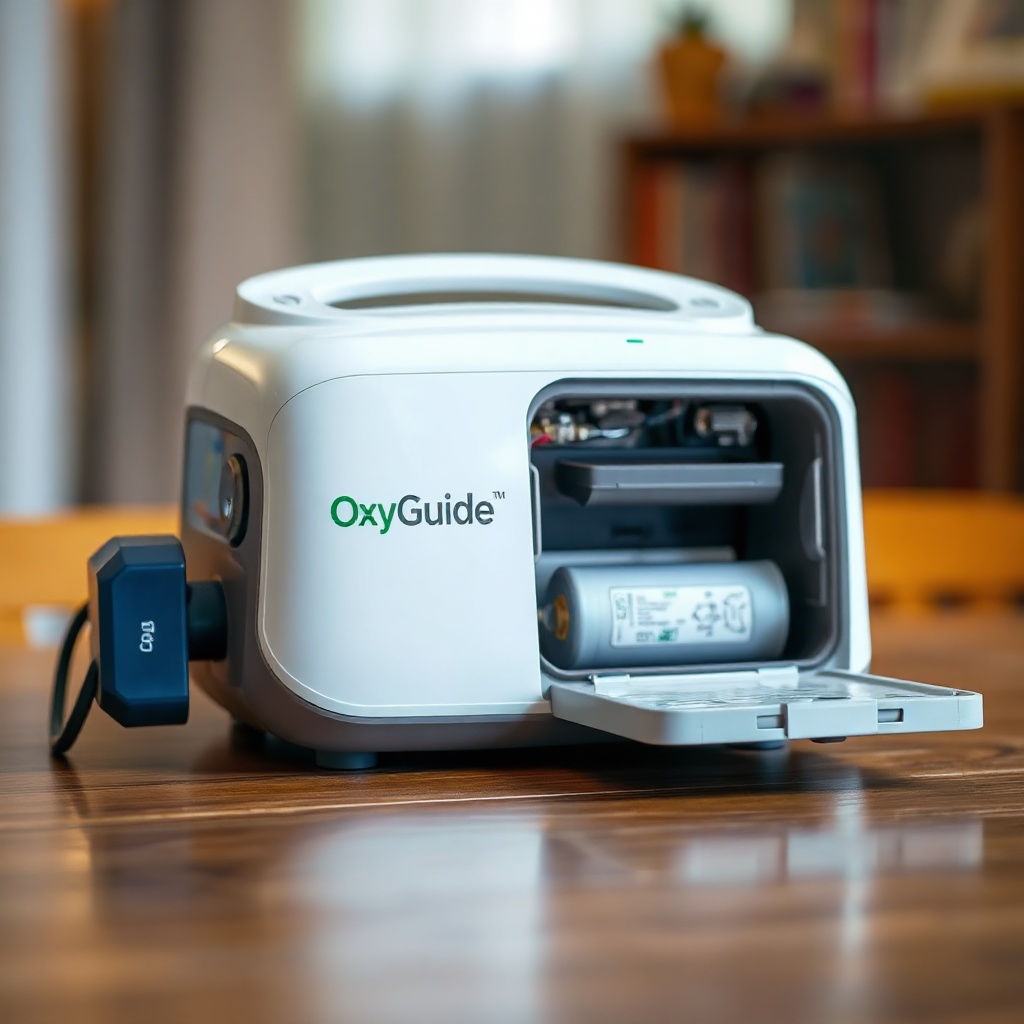
To test your unit, fully charge the battery, then remove it from the OxyGuide Comfort if possible. Store it at room temperature (20-25°C / 68-77°F) and check voltage after 48 hours. A drop of more than 5% indicates a deeper issue. For persistent idle drain, consult our guide on OxyGuide Comfort Battery Drain Issues: Common Causes and Fixes for step-by-step diagnosis.
What Firmware or Software Settings Cause Idle Battery Drain?
Your OxyGuide Comfort’s firmware controls how the device manages power in standby or off states. Some users report that leaving the device in “travel mode” or with Bluetooth enabled (if equipped) increases idle consumption. The firmware version can also affect the BMS’ ability to shut down completely.
Common software-related drain sources:
- Bluetooth or Wi-Fi modems: If active, these modules continuously search for signals, drawing 0.5-1.5mA each.
- Screen backlight timer: A bug may prevent the screen from fully turning off, especially after alarms.
- Alarm memory: After a low oxygen event, the unit might keep the alarm circuit energized until reset.
Fix suggestions:
- Press and hold the power button for 10 seconds to force a hard shutdown. This clears any stuck logic.
- Disable wireless features through the settings menu before turning off.
- Update firmware if a service bulletin exists. Contact your provider or check the manufacturer website.
- After any alarm event (OxyGuide Comfort Troubleshooting: Low Oxygen Alarms and How to Fix Them), perform a full power cycle: turn off, remove battery for 30 seconds, reinsert, and turn on.
How Does Battery Age Affect Idle Drain on the OxyGuide Comfort?
Battery chemistry is the primary driver of self-discharge. As lithium-ion cells age, their internal resistance increases, and electrolyte degradation leads to higher leakage currents. The OxyGuide Comfort typically uses a 98Wh or 147Wh battery pack, and after 18-24 months of regular use, idle drain can double.
What to expect over a battery’s lifespan:
| Battery Age (Months) | Typical Idle Drain (% per week) | Recommended Action |
|---|---|---|
| 0-12 | 1-2% | Normal operation; store at 40-60% charge |
| 12-18 | 3-5% | Monitor monthly; consider replacement if >8% |
| 18-24 | 5-8% | Plan replacement within 6 months |
| 24+ | 8-12% | Replace immediately if drain exceeds 10% per week |
Note: Replacements typically cost between $129 and $199 USD (approx. £100-£160 or €115-€180). Check warranty coverage first.
Prolong battery life:
- Store batteries at 40-60% charge in a cool, dry place.
- Avoid deep discharges (below 20%) regularly.
- Use the OxyGuide Comfort at least once every 2 months to cycle the cells.
Can Environmental Factors Like Heat or Cold Cause Battery Drain While Idle?
Absolutely. Extreme temperatures are the most overlooked cause of idle battery drain. The OxyGuide Comfort’s lithium-ion battery is rated for storage between -20°C and 50°C (-4°F to 122°F), but optimal performance requires 10°C to 30°C (50°F to 86°F).
How temperature impacts drain:
- Heat (above 40°C/104°F): Accelerates chemical degradation, causing 2-3x faster self-discharge. In summer cars or near heaters, a fully charged battery can drop to 60% in a week.
- Cold (below 0°C/32°F): Increases internal resistance, but paradoxically reduces self-discharge. However, when warmed up, the battery may report lower charge due to voltage depression (not true drain).
Best practices:
- Never store the OxyGuide Comfort in a car trunk or direct sunlight.
- If traveling by air, keep the device in cabin baggage (see OxyGuide Comfort FAA Approval: What You Need to Know for Flying for guidelines).
- Allow cold batteries to reach room temperature before charging or using them.
If you live in a climate with extreme seasonal variations, consider removing the battery during storage and keeping it indoors.
How to Diagnose If the Battery or the Device Is Causing Idle Drain?
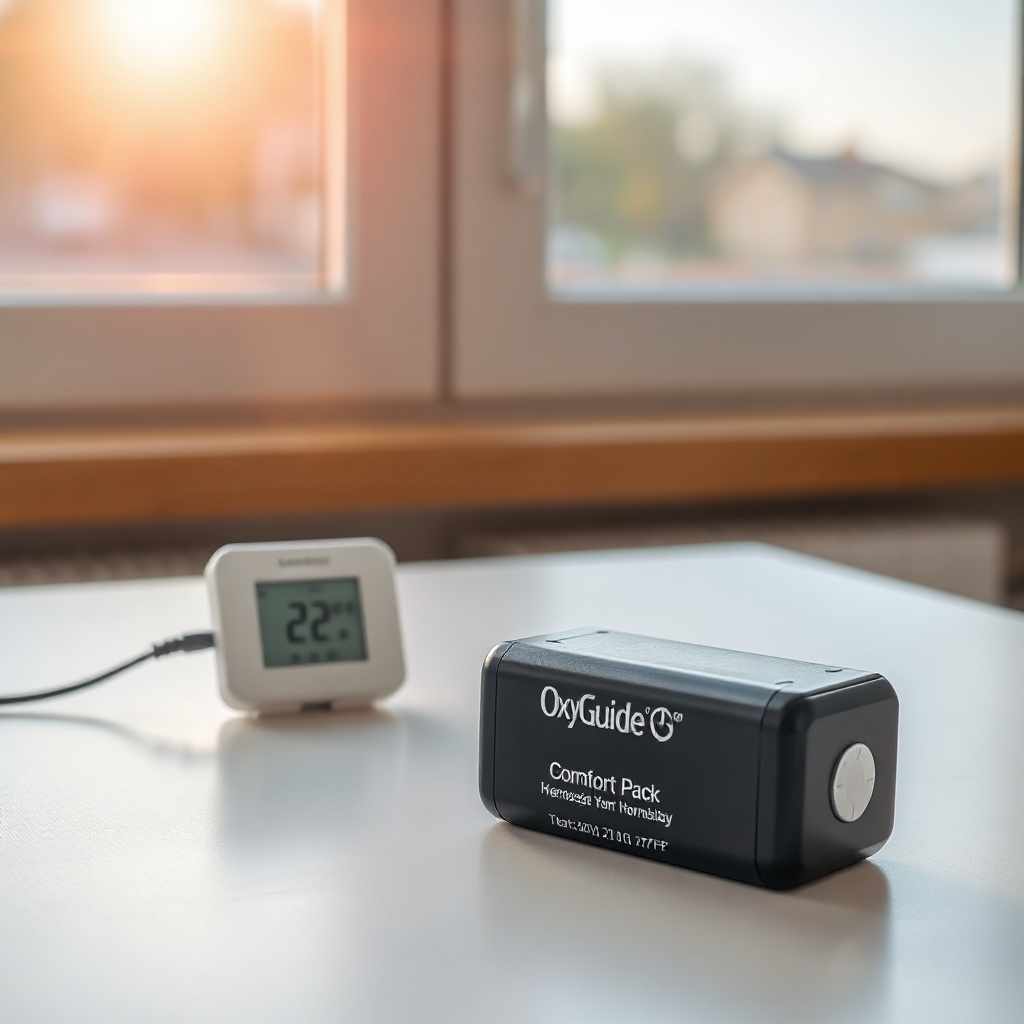
Before replacing components, isolate the problem. The OxyGuide Comfort’s charger port and internal electronics can also cause parasitic drain if a capacitor is failing or a MOSFET is stuck on.
Step-by-step diagnosis:
- Remove battery from the POC. Let it sit for 24 hours, then measure voltage with a multimeter. If it drops more than 0.1V (approx. 3-5%), the battery itself is faulty.
- Test the device without battery: Plug the OxyGuide Comfort into AC power, turn it on, then unplug. If the unit stays on for even a second, internal capacitors are draining, indicating a potential BMS or capacitor fault.
- Check with a spare battery (if available). If idle drain persists with a known good battery, the device’s power management board may need servicing.
- Monitor charge cycles: The OxyGuide Comfort’s battery controller tracks cycle count. Over 500 cycles, replacement is standard.
For detailed alarm analysis, refer to OxyGuide Comfort Battery Drain Issues: Common Causes and Fixes for advanced troubleshooting.
What Owners Say About Idle Battery Drain
Community feedback reveals that idle drain is a manageable issue with proper care. Many users report initial panic over 5-10% drops, only to find that a firmware update or removing Bluetooth solved the problem. One owner on a respiratory support forum noted: “I store my OxyGuide Comfort in a cool basement, and after 2 years, it loses only 2% per week. I calibrate the battery every 3 months by fully cycling it.”
Common owner tips:
- “Turn off the device using the power menu, not just holding the button.”
- “I bought a second battery pack and charge it every month to keep it topped at 60%.”
- “After my low oxygen alarm, I always unplug the battery and let the unit sit for an hour.”
- “My provider replaced the battery under warranty when idle drain exceeded 15%.”
Some owners note that the OxyGuide Comfort’s pulse dose vs continuous flow settings do not affect idle drain, but improper storage can. For more on conserving oxygen, read OxyGuide Comfort Oxygen Conservation Efficiency: Pulse Dose vs Continuous Flow. Noise levels during operation can be compared in OxyGuide Comfort vs Philips SimplyGo Mini: Which is Quieter?
Frequently Asked Questions
1. Can I leave my OxyGuide Comfort plugged in all the time?
Yes, but only if the battery is removed. Keeping the battery at 100% charge while plugged in can accelerate degradation. If you must leave it plugged, set a timer to disconnect after full charge.
2. How do I reset the OxyGuide Comfort battery management system?
Remove the battery, press and hold the power button for 20 seconds (even without battery), then reinsert and charge fully. This resets the BMS. Repeat twice if the drain persists.
3. Is it safe to store the OxyGuide Comfort with a fully charged battery?
For storage over 2 weeks, aim for 40-60% charge. Full charge at high temperatures can cause swelling or reduced capacity. Partial charge reduces stress on cells.
4. My OxyGuide Comfort drain 20% while idle after a flight. What happened?
Airport security X-ray machines and pressure changes can confuse the battery’s voltage reading. Fly with the battery charged to 80% and allow 24 hours for the battery to stabilize. If the drain persists, run a calibration cycle.
5. Does the OxyGuide Comfort drain battery if I leave it in continuous flow mode while turned off?
No. The mode setting only affects operation when the device is on. When turned off, the circuits should be completely isolated. The mode selection uses no standby power.
6. How much does a replacement OxyGuide Comfort battery cost?
Prices range from $129 to $199 USD (approximately £100-£160 or €115-€180). Check your warranty; some providers offer free replacement within 2 years if battery capacity drops below 50%.