
Introduction
For individuals relying on the OxyGuide Comfort portable oxygen concentrator, maintaining power during travel is a critical priority. The device’s battery life is the lifeline that ensures continuous oxygen therapy, and car charging offers a convenient solution for road trips, commutes, and everyday outings. This article provides a comprehensive guide to car charging the OxyGuide Comfort, covering essentials like compatible chargers, battery management, safety tips, and troubleshooting, ensuring you stay powered wherever the road takes you.
What Car Charger Is Compatible With the OxyGuide Comfort?
The OxyGuide Comfort uses a dedicated 12V DC car charger (cigarette lighter adapter) that comes standard with the device. This charger is specifically designed to match the concentrator’s power input requirements, typically delivering 12-15 volts and 5-8 amps. Using any third-party charger not approved by the manufacturer may risk damage to the battery or unit. The included car charger plugs directly into your vehicle’s 12V auxiliary power outlet, often located near the dashboard or center console. For vehicles with 24V electrical systems (e.g., some trucks or RVs), you will need a step-down converter to safely charge the OxyGuide Comfort. Always check the charger’s label for compatibility specifications before use, and avoid using adapters that convert to a different voltage output.
How Does the OxyGuide Comfort Car Charger Work?
The car charger converts your vehicle’s 12V DC power into the correct voltage and current needed by the OxyGuide Comfort’s internal battery management system. When you plug the charger into the device’s charging port (located on the rear panel), it begins charging the lithium-ion battery pack while also powering the concentrator if the device is turned on. The device will draw power from the car battery rather than its own battery, which helps conserve internal battery capacity for use when not connected to the vehicle. This is especially beneficial for long drives where you can simultaneously run the device and charge its battery. The OxyGuide Comfort will automatically switch between the car charger and internal battery without interruption, so your oxygen delivery remains steady during the transition.

Can You Run the OxyGuide Comfort While Driving Without the Car Charger?
Yes, you can operate the OxyGuide Comfort on its internal battery while driving, but this will gradually deplete the battery over the trip. The device’s runtime on a fully charged battery ranges from approximately 4 to 8 hours, depending on the flow rate setting (pulse dose or continuous flow) and the oxygen purity requirements. If you plan on a long drive, it is strongly recommended to use the car charger to preserve battery life for use outside the vehicle. Additionally, using the car charger prevents the battery from completely draining during travel, ensuring you have backup power at your destination. The OxyGuide Comfort also features a battery indicator that shows remaining charge, so you can monitor when a charge is needed — particularly useful on extended journeys.
How Long Does It Take to Fully Charge the OxyGuide Comfort Battery Using a Car Charger?
Charging the OxyGuide Comfort battery via the car charger is slower than using the standard AC wall charger due to the lower power output of a typical vehicle’s 12V outlet. On average, a full charge from empty takes about 6 to 8 hours. In contrast, the AC home charger can reach full charge in around 4 to 5 hours. However, the car charger provides a reliable way to replenish the battery during a road trip, especially if you take breaks (e.g., for meals or sightseeing). For partial charges, the device’s battery management system accepts charging at any point, and the battery gains usable capacity more quickly in the first few hours — you can achieve about 50% charge in roughly 3 to 4 hours. To maximize car charging efficiency, ensure your vehicle’s engine is running while charging, as this delivers a stable voltage and reduces strain on the car battery.
What Are Best Practices for Safe Car Charging of the OxyGuide Comfort?
Safe car charging extends the life of your OxyGuide Comfort battery and prevents damage. Follow these practices:
- Use only the official car charger designed for the OxyGuide Comfort to avoid voltage mismatches.
- Keep the vehicle engine running while charging to maintain consistent power and prevent draining the car battery.
- Avoid charging in extreme temperatures (below 32°F or above 104°F) as high heat or cold can degrade battery performance.
- Inspect the charging cable and connectors regularly for fraying or corrosion; replace if damaged.
- Disconnect the charger when not in use to prevent parasitic drain from the device.
- Do not use extension cords or splitters with the car charger, as they can reduce voltage quality.
- Monitor the battery indicator; if it shows rapid discharge or overheating, stop charging and consult the manual. For deeper troubleshooting, see OxyGuide Comfort Battery Drain While Idle: Common Causes and Fixes.
OxyGuide Comfort Battery Specification Comparison (AC vs Car Charging)
| Feature | AC Home Charger | Car Charger (12V DC) |
|---|---|---|
| Charging time (full charge from empty) | 4–5 hours | 6–8 hours |
| Power output | 100-240V AC, 1.5A | 12V DC, 5-8A |
| Battery capacity after 2 hours charge | ~50% | ~30-40% |
| Optimal usage scenario | Home, hotel, stationary use | Road trips, vehicle travel |
| Risk of overheating | Low (regulated AC) | Moderate (check car battery health) |
| Portability | Bulky power brick | Compact, stays in car |
What Owners Say About Car Charging the OxyGuide Comfort
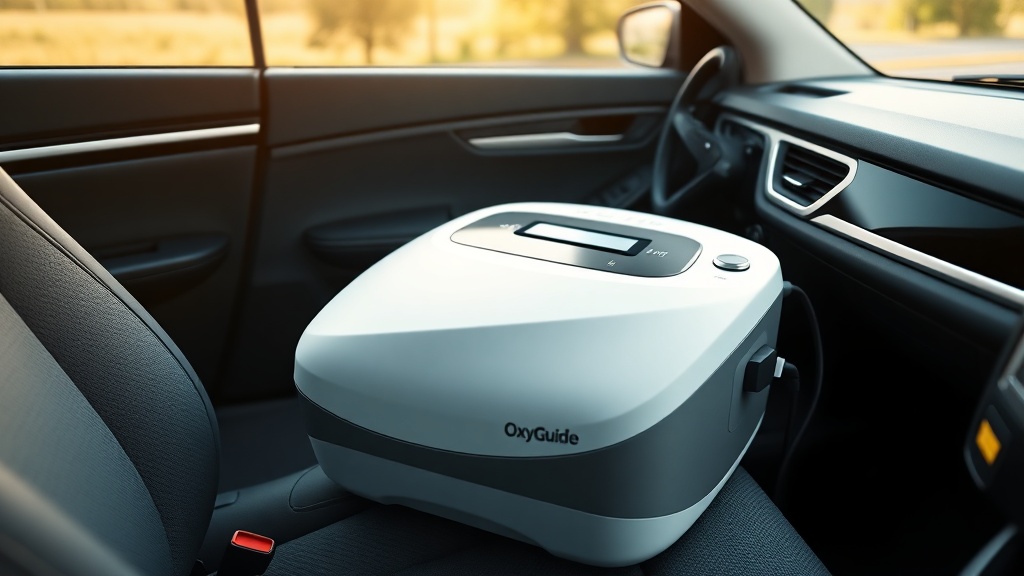
Users frequently highlight the convenience of car charging during road trips. Many owners report that the device easily fits on the passenger seat or floor and that the car charger keeps the battery topped off even during long drives exceeding 6 hours. Positive feedback often notes the seamless switch between internal battery and car power—interruptions are rare, and oxygen flow remains consistent. However, some owners mention that the car charger cable can be slightly short, making positioning of the device awkward in larger vehicles like SUVs. Others advise that the charging process is slower than expected, but they consider this acceptable given the trade-off of not having to stop for AC charging. A recurring tip from owners is to plug the charger in before starting the car to prevent voltage spikes. For those experiencing battery issues like holding less charge after extended use, see OxyGuide Comfort Battery Not Holding Charge: Solutions for expert advice.
Frequently Asked Questions
Can I use a third-party car charger with the OxyGuide Comfort?
It is not recommended. Third-party chargers may not regulate voltage correctly, potentially damaging the battery or voiding the warranty. Always use the OEM charger supplied with your device.
Does the OxyGuide Comfort charge while running on car power?
Yes. When connected to the car charger and the device is turned on, it draws power from the vehicle’s battery to operate the concentrator and simultaneously charges the internal battery, albeit at a slower rate.
How long can I drive before the car battery drains?
With a healthy car battery and the engine running, there is negligible drain. The alternator provides sufficient power, so you can drive indefinitely while using the OxyGuide Comfort on car charge. Just avoid leaving the device plugged in with the engine off for extended periods to prevent car battery depletion.
What should I do if my OxyGuide Comfort battery drains quickly while car charging?
Check the charger connection and vehicle outlet for corrosion or looseness. Ensure the engine is running. If the issue persists, the battery may need recalibration or replacement. Refer to OxyGuide Comfort Battery Drain While Idle: Common Causes and Fixes for troubleshooting steps.
Can I use the car charger with a power inverter instead of the 12V outlet?
Yes, but ensure the inverter is pure sine wave and rated at least 150W to handle the OxyGuide Comfort’s peak power draw (typically 100-120W). Using a modified sine wave inverter may cause electrical noise or reduced charging efficiency.
Why does my OxyGuide Comfort have a low oxygen alarm even when charging in the car?
This could indicate an issue with the battery or internal components, not necessarily the charger. If the alarm persists, check the device’s airflow and filters. For detailed solutions, read OxyGuide Comfort Troubleshooting: Low Oxygen Alarms and How to Fix Them.