How Long Does the Inogen One G5 Battery Typically Last?
The Inogen One G5 is a highly portable oxygen concentrator that relies on a lithium-ion battery for mobile use. Understanding battery longevity is crucial for users who depend on continuous oxygen therapy. Under standard settings at pulse dose setting 2 with a normal breathing rate of 20 breaths per minute, the factory-original battery (model IOG5-BAT) provides approximately 4.5 to 5 hours of run time. This figure represents the best-case scenario and decreases with higher pulse dose settings, increased breath rate, and as the battery ages over its 500–600 full charge cycles.
Battery performance degrades gradually. A well-maintained battery after 12 months of daily use might deliver only 80% of its original capacity, meaning 3.6 to 4 hours of operation at low settings. Recognizing this decline early allows users to schedule a replacement before being caught without adequate power during travel or nightly use.
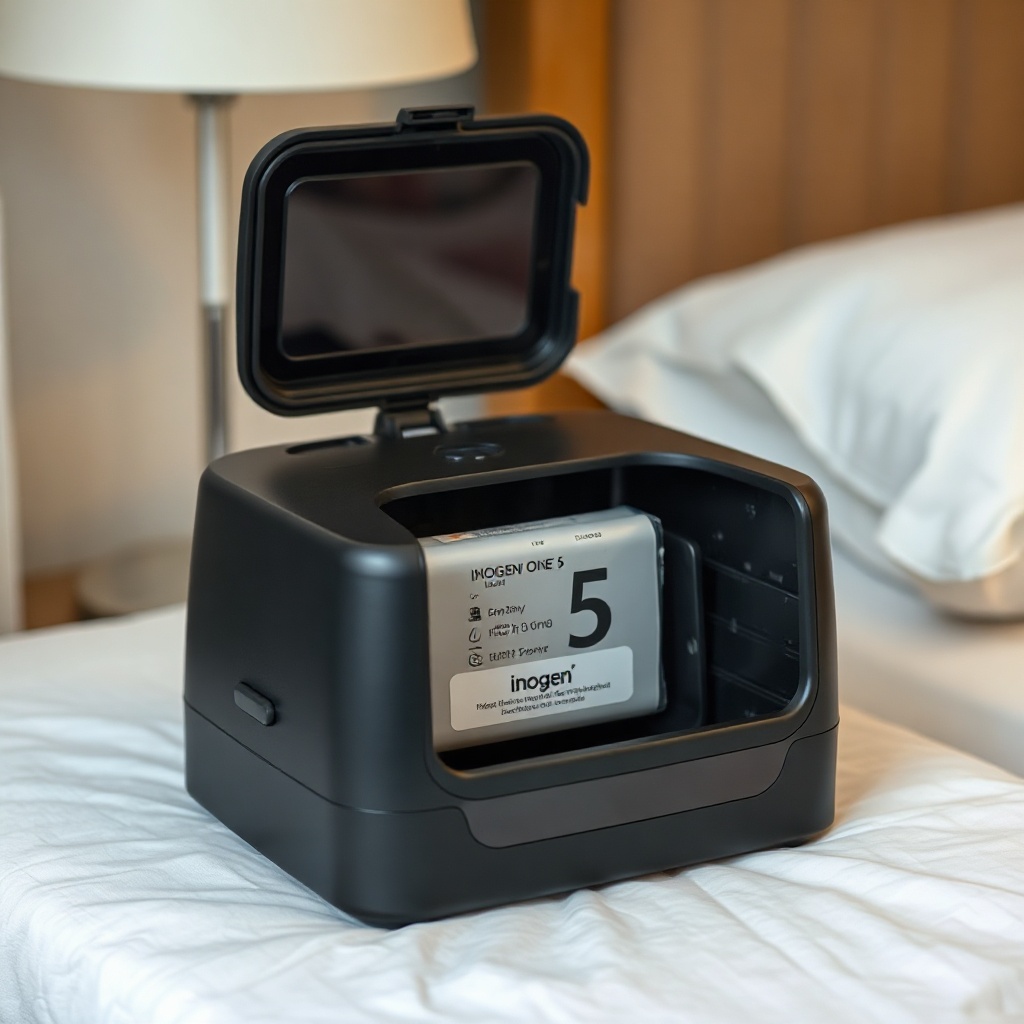
When Should You Replace the Inogen One G5 Battery?
The most reliable indicator is the battery status light behavior on the G5 unit. When the battery can no longer hold a meaningful charge, the solid orange or red light will illuminate during operation, or the unit will shut down prematurely even after a full charge. Other signs include physical swelling of the battery pack, heat buildup during charging, or a sudden drop in run time—for instance, dropping from 4 hours to less than 2 hours under the same settings.
Users should also monitor the number of charge cycles. Inogen recommends replacement after approximately 500 cycles. If you charge the battery once daily, this translates to roughly 16–18 months of use. However, if you cycle the battery multiple times per day (e.g., charging between short trips), replacement interval shortens proportionally. For safety, any battery that exhibits cracking, leakage, or excessive heat should be replaced immediately, regardless of age.
| Run Time Change (Setting 2) | Likely Battery Health | Action Needed |
|---|---|---|
| 4.5–5.0 hours | Excellent (new or near-new) | No action |
| 3.5–4.4 hours | Good (80–90% capacity) | Monitor; plan replacement within 6 months |
| 2.5–3.4 hours | Fair (60–80% capacity) | Consider replacement within 3 months |
| < 2.5 hours | Poor (below 60% capacity) | Replace immediately |
How to Replace the Inogen One G5 Battery Step by Step
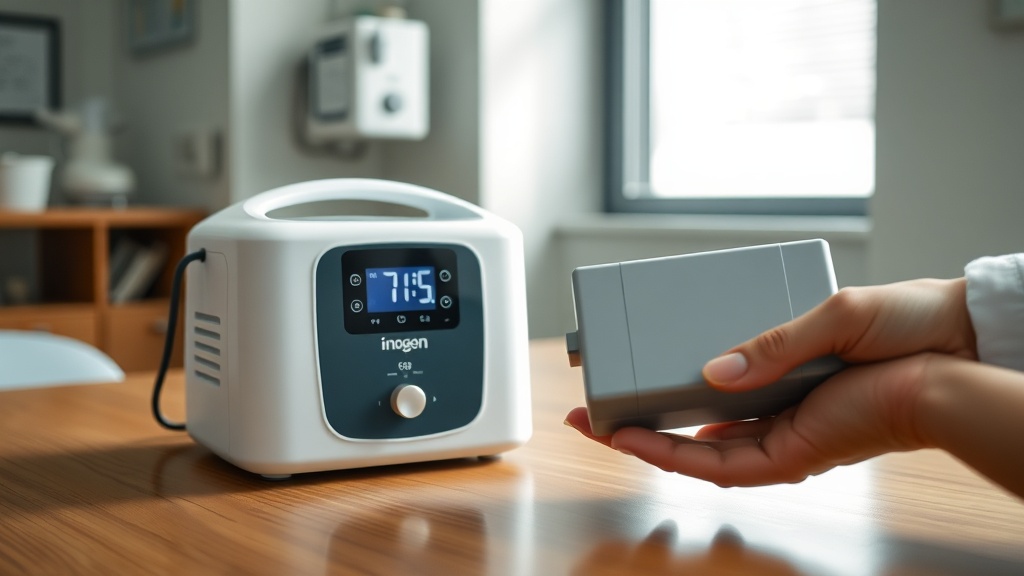
Replacing the battery on the Inogen One G5 is a straightforward process that requires no tools. Begin by ensuring the concentrator is turned off and disconnected from the AC power supply. Locate the battery release latch on the rear panel of the unit. Slide the latch upward while gently pulling the battery away from the concentrator body. The battery will separate smoothly if the latch is fully disengaged.
Before installing the new battery, inspect the connection terminals on both the G5 unit and the new battery pack. Look for any dirt, corrosion, or debris. If present, clean the contacts with a dry cotton swab. Align the new battery with the guides on the back of the concentrator, then slide it into place unit you hear a distinct click. This click confirms the latch has locked the battery securely. Reconnect the power supply and turn the unit on to verify the battery is recognized. The battery indicator lights should cycle and then show a steady green (charging) or blue (charged) status.
What Are the Correct Specifications for a Replacement Inogen One G5 Battery?
Using the wrong battery can damage the concentrator or compromise oxygen delivery. The official Inogen One G5 battery (part number IOG5-BAT) is a lithium-ion pack rated at 14.4 volts and 98 watt-hours (approximately 6.8 amp-hours). Dimensions are 4.2 x 3.1 x 1.4 inches, and weight is approximately 0.9 pounds (425 grams). Third-party replacement batteries exist but must meet identical voltage and capacity specifications.
Critically, the replacement battery must be compatible with the G5’s battery management system (BMS). Batteries not programmed with the correct communication protocol may cause the G5 to show an error code (often error 11 or error 12) or refuse to charge. Always purchase from a reputable source and verify the battery is designed explicitly for the Inogen One G5. The Inogen One G5 Buying Guide: What to Know Before You Buy includes a section on identifying genuine battery packs and avoiding counterfeits.
How Much Does an Inogen One G5 Replacement Battery Cost?
Pricing for the official Inogen One G5 replacement battery ranges from £269 to £329 in the UK and $350 to $430 in the US. Third-party batteries from established medical device retailers typically cost between £150 and £220 ($195–$285). However, cheaper options often sacrifice BMS compatibility, warranty support, or safety certifications (e.g., CE, UKCA, or UL).
Warranty coverage is a key factor. Inogen includes a 1-year limited warranty on new batteries, which covers manufacturing defects but not normal wear. Third-party sellers may offer 90-day to 6-month warranties. Given that the battery is a critical component for oxygen therapy, the small premium for an official or certified equivalent is generally worthwhile. For those on NHS-funded programs in the UK, check with your provider about replacement eligibility, as some schemes cover battery replacement at regular intervals.
What Owners Say About Inogen One G5 Battery Life
User feedback on the Inogen One G5 battery is generally positive but highlights realistic expectations. One owner on a pulmonary support forum noted, “After 14 months, my original battery still gives me 3.8 hours on setting 2. That’s less than the 5 hours I got new, but still more than enough for my shopping trips.” Another user expressed frustration: “I use setting 4 often because of my nighttime breathing, and my first battery barely lasted 2.5 hours from day one. I replaced it with a third-party pack and now get 3 hours.”
Frequent complaints involve the battery indicator accuracy. Several users report that the indicator shows 50% charge but then drops to 20% within 30 minutes, a classic symptom of aging cells. The consensus is to plan for replacement at 18 months for moderate use and 12 months for heavy use. Many owners pair their G5 with a Best Travel Cases for Inogen One G5 to protect the battery during transport, as physical shock can damage internal cells. Additionally, understanding Inogen One G5 Pulse Dose Settings Explained helps users optimize run time without compromising oxygen therapy.
Frequently Asked Questions
Q: Can I use the Inogen One G5 while it is charging?
A: Yes. The G5 supports simultaneous operation and charging, known as pass-through power. However, the battery will charge more slowly while the unit is delivering oxygen, and extreme heat buildup should be avoided.
Q: How do I properly dispose of an old Inogen One G5 battery?
A: Lithium-ion batteries must not be placed in household waste. In the UK, return the battery to a local WEEE recycling center or a participating pharmacy. In the US, use a Call2Recycle drop-off location. Inogen also offers a mail-back recycling program for a nominal fee.
Q: My Inogen One G5 shows error code 11 after battery replacement. What should I do?
A: Error 11 often indicates a communication failure between the battery and the concentrator. Remove and reseat the battery to ensure proper contact. If the error persists, the replacement battery may be incompatible. Refer to the Inogen One G5 Error Codes: Troubleshooting Guide for detailed resolution steps.
Q: Can I extend the life of my Inogen One G5 battery?
A: Store the battery at 40–60% charge in a cool, dry place if not used for extended periods. Avoid deep discharge (below 10%) and exposure to temperatures above 40°C (104°F). Use the AC adapter whenever possible to preserve cycle count.
Q: Why does my new battery only last 3 hours when the specifications say 5 hours?
A: Specified run times are measured at pulse dose setting 2 with a 20 breaths/min rate. Higher settings (4–6), rapid breathing, or use in cold ambient temperatures will reduce run time significantly. Check your pulse dose setting; if you use setting 4, expect approximately 2.5–3 hours maximum.
Q: Is it safe to use a third-party replacement battery for clinical oxygen therapy?
A: Only if the battery meets relevant safety standards (CE, UKCA, or UL) and is explicitly labeled for the Inogen One G5. Third-party batteries may lack the same BMS protection against overcharge, over-discharge, or short circuits, posing a fire risk. Always consult your healthcare provider or respiratory therapist before using non-OEM batteries.