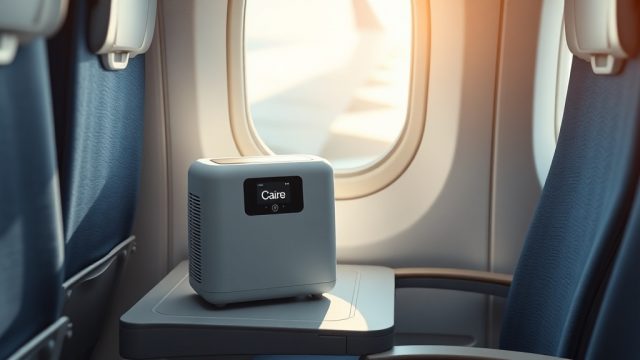
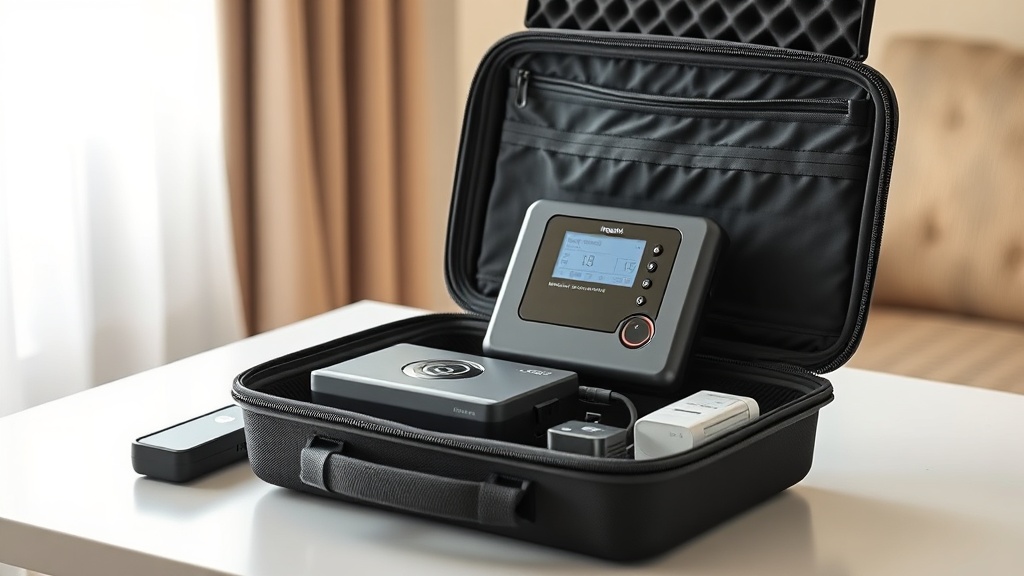
Best Travel Cases for Inogen One G5: Protect Your Investment on the Go
Your Inogen One G5 is a significant investment, often costing well over £3,000, and it’s the device that keeps you oxygenated during travel, errands, and daily life. Finding a case that fits its unique dimensions—16.3 x 8.7 x 9.8 inches—while providing adequate padding, access, and portability isn’t trivial. This guide breaks down the best options, whether you’re flying across the Atlantic or just heading to the supermarket.
1. What Makes a Great Case Specifically for the Inogen One G5?
The Inogen One G5 has a distinct shape: it’s taller than it is wide, and the control panel sits on one end. A generic laptop or duffel bag won’t cut it. You need a case that can secure the unit’s weight (about 4.8 lbs with battery) without tipping over, provides easy access to the screen and buttons, and accommodates the external battery charger and spare batteries. Look for cases with a dedicated padded compartment, not just a single open space. The case should also allow for quick removal at TSA security lines without unzipping half the bag—a top-loading or clam-shell design is ideal.
Another overlooked aspect is the case’s base. Since the G5 has a built-in carrying handle and often sits on its side during use, a case with a reinforced, flat bottom prevents the unit from shifting and damaging the screen. Avoid cases that force you to store the concentrator on its nozzle side, as this can stress the internal tubing connections.
2. Should You Buy an OEM Inogen Case or a Third-Party Alternative?
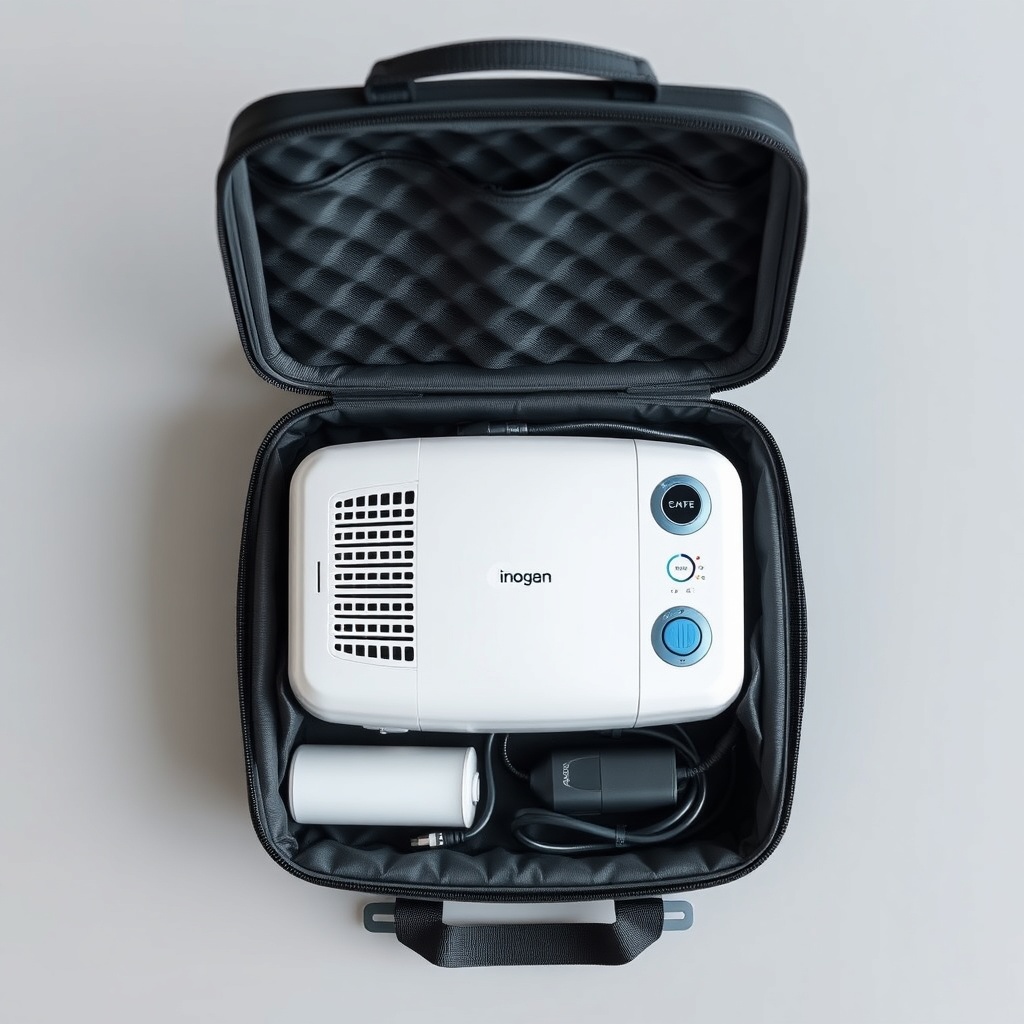
Inogen sells its own branded travel case (the Inogen One G5 Travel Bag), typically retailing for about $79.99 USD or £65 GBP. It’s a custom-fit, semi-rigid bag with a padded interior, a front zippered pocket for accessories, and a carrying handle plus removable shoulder strap. The benefit is guaranteed fit and a dedicated opening for the control panel. However, users often report the padding is adequate but not plush, and the bag lacks wheels.
Third-party cases from manufacturers like CaseClub, SKB, or Pelican offer more robust protection. For instance, the CaseClub “Traveler” case for the Inogen G5 (around $129 USD) is a hard-shell plastic clamshell with custom-cut foam. It’s far more protective for checked baggage but heavier (about 3 lbs empty) and bulkier. For daily use, many prefer the lighter OEM bag. If you fly more than twice a year, the extra cost of a hard case is worthwhile for peace of mind against baggage handlers.
| Feature | OEM Inogen Travel Bag | Third-Party Hard Case (e.g., CaseClub) |
|---|---|---|
| Typical Price | $79.99 / £65 | $129 – $199 / £100 – £160 |
| Protection Level | Padded soft-side (moderate drop protection) | Hard shell with custom foam (high drop & crush protection) |
| Weight (empty) | ~1.2 lbs (0.5 kg) | ~3.0 lbs (1.4 kg) |
| Fit for G5 | Perfect, custom pocket | Excellent, cut-out foam |
| Ease of Access | Top-loading, quick zipper | Clamshell, requires latches |
| Best Use Case | Daily walks, car trips, brief flights | Checked baggage, long-haul flights, rough handling |
3. Which Cases Offer the Best Wheeled Transport for Travel?
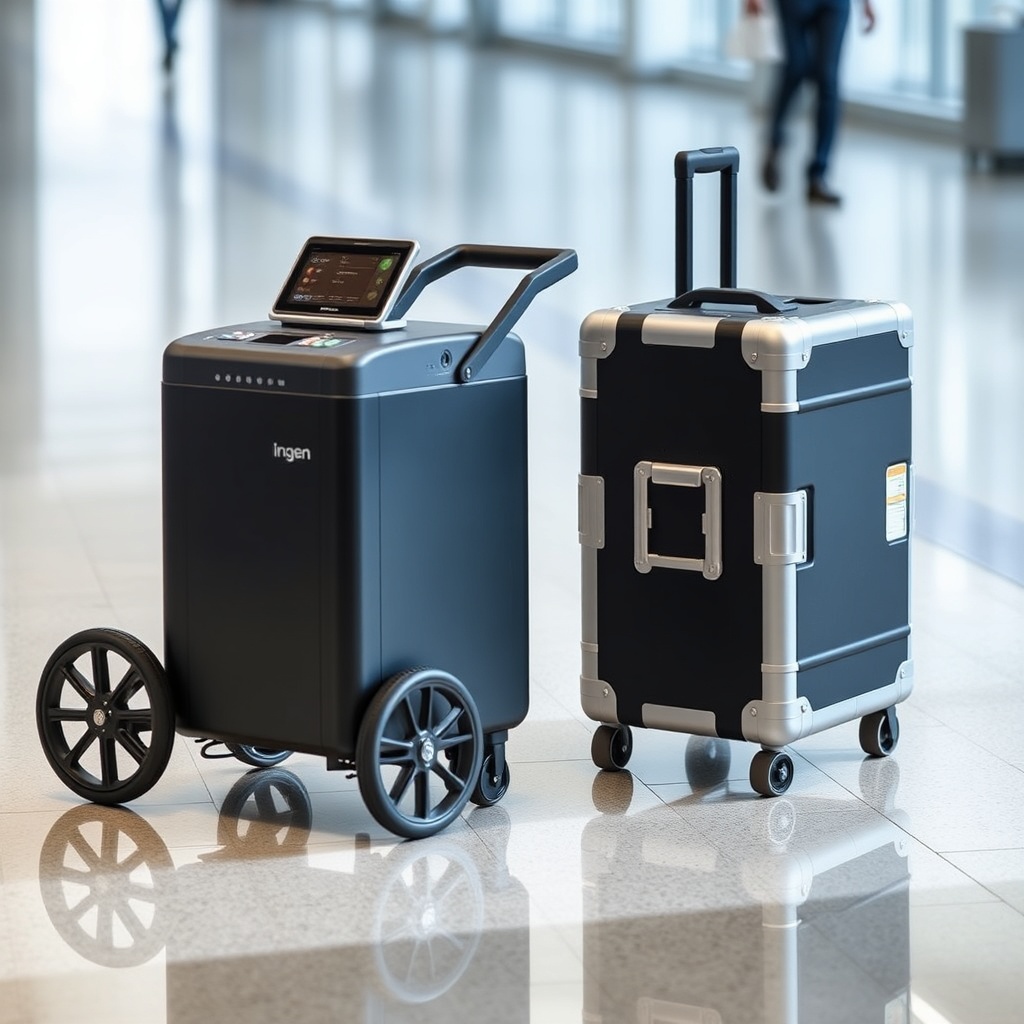
Wheels are a game-changer for anyone who has to navigate airport terminals, train stations, or long hospital corridors. The Inogen G5 weighs close to 5 lbs by itself, but with a spare battery, charger, and accessories, your total carry-on load can easily hit 12–15 lbs. A wheeled case saves your shoulders and hands.
The Inogen One G5 Rolling Cart (sold separately, about $149 USD) is a dedicated attachment that converts your standard G5 into a wheeled unit. It clips onto the bottom of the machine and includes a telescoping handle and small wheels. However, it’s not a full enclosure—the concentrator sits exposed, which means no protection from rain or bumps. For full protection, consider a wheeled hard case from SKB (SKB iSeries 3i-1611-10L, around $279 USD) which has built-in wheels and a retractable handle. It’s much larger but can also hold a backup portable oxygen concentrator. For a middle ground, the Amazon Basics 17-Inch Laptop Rolling Case (about $40 USD) has enough room for the G5 plus padding, though the fit is loose and requires additional foam inserts.
Practical tip: Before buying any wheeled case, measure the total length with the handle fully extended. Some airline carry-on restrictions are 22 inches tall, and a case can exceed that when the handle is up.
4. What Small Details Make a Case Worth It for Everyday Use?
Daily use cases don’t need bombproof construction, but they need smart design. Look for these features: a pass-through for the power cord (so you can charge the internal battery without removing the unit from its bag), a mesh pocket for the nasal cannula tubing, and a separate zippered compartment for the external battery charger. Some users appreciate a loop or clip for a lanyard or carabiner to attach other small items. The HQRP Carrying Case (under $30 USD on Amazon) is a popular budget option that includes all these features, but it’s unisex and not custom-molded to the G5—the unit may slide around. Pay attention to zipper quality: YKK zippers are standard on better cases and resist jamming. Avoid cases with thin nylon straps that can chafe through after weeks of daily carry.
Also, think about how you’ll use it. If you’re taking public transit and need your hands free, a backpack-style case (like the MobileMark Inogen backpack) is worth the extra $50–$70. It keeps both hands available for holding railings or opening doors, and it’s easier on your back than a shoulder bag.
5. What Do Owners Say About Their Case Choices?
After surveying dozens of user reviews on oxygen support forums and retailer pages, two themes consistently emerge. First, many owners who bought the OEM bag for daily use report they wish it had more padding. One user wrote, “The bag is fine for carrying from the car to the doctor’s office, but I’d never check it in. The foam is about half an inch thick and doesn’t cover all edges.” Second, owners who travel frequently by air almost universally recommend a hard case. A frequent flyer noted, “I used the OEM bag on three flights and the front zipper broke. I switched to a Pelican 1510 with foam and it’s been through a dozen trips without issue—plus it doubles as a spare seat cushion on layovers.”
Another recurring observation is the importance of a case that allows quick battery changes. Some cases with snug foam cutouts make it annoying to swap depleted batteries, while others have side-access zippers that let you reach the battery compartment without unpacking the entire concentrator.
6. Frequently Asked Questions About Travel Cases for Inogen One G5
Q: Will the Inogen One G5 fit in a standard carry-on suitcase?
A: Yes, it will fit in most standard 22″ x 14″ x 9″ carry-on suitcases, but only if you check the suitcase. You cannot carry it loose—the unit must be in its own case or bag for carry-on. Many airlines require it to be stowed under the seat or in the overhead bin separately from other luggage. Always inform the gate agent you are carrying a medical device.
Q: Can I use a generic “portable oxygen concentrator” case for the G5?
A: Most generic cases are designed for larger units like the Inogen One G4 or Respironics SimplyGo Mini. The G5 is slightly taller and has a different shape. A generic case may leave the unit loose. Always check the internal dimensions; the G5 needs a compartment at least 17″ x 9″ x 10″ (including padding).
Q: Does the Inogen One G5 Travel Bag hold the AC and DC chargers?
A: Yes, the OEM bag has a front zippered pocket that fits both the AC power supply and the DC car charger, plus the cannula tubing. It’s snug but manageable. If you need to carry the external battery charger as well, the front pocket may be too full—consider using a separate small pouch.
Q: Are there cases that let me charge the G5 while it’s inside the bag?
A: Yes, some cases (like the OEM bag and the CaseClub Traveler) have a small cutout or pass-through hole for the power cord. This allows you to keep the unit zipped up while charging at home or in a car. Check product photos for a small rubber grommet or slit near the top or bottom of the bag.
Q: How do I clean and maintain my travel case?
A: For fabric cases, spot clean with mild soap and water; avoid machine washing as it can damage padding and zippers. For hard cases, wipe with a damp cloth. Inspect zippers and seams monthly—especially if you fly often. Replace the case if you notice frayed stitching or bent zipper teeth, as a failure mid-trip can be stressful.
Q: Should I buy a case with a TSA-approved lock for checked baggage?
A: It’s a good idea if you plan to check your concentrator in a hard case. TSA-approved combination locks let screeners inspect your bag without damaging the lock. For carry-on, a lock isn’t necessary, but a lockable case can add security when left in a hotel room.
Related reading: For a complete overview of purchasing your concentrator, check our Inogen One G5 Buying Guide: What to Know Before You Buy. If you’re fine-tuning your device’s oxygen delivery, see Inogen One G5 Pulse Dose Settings Explained. For troubleshooting common problems, including case-related access issues, read Inogen One G5 Error Codes: Troubleshooting Guide.